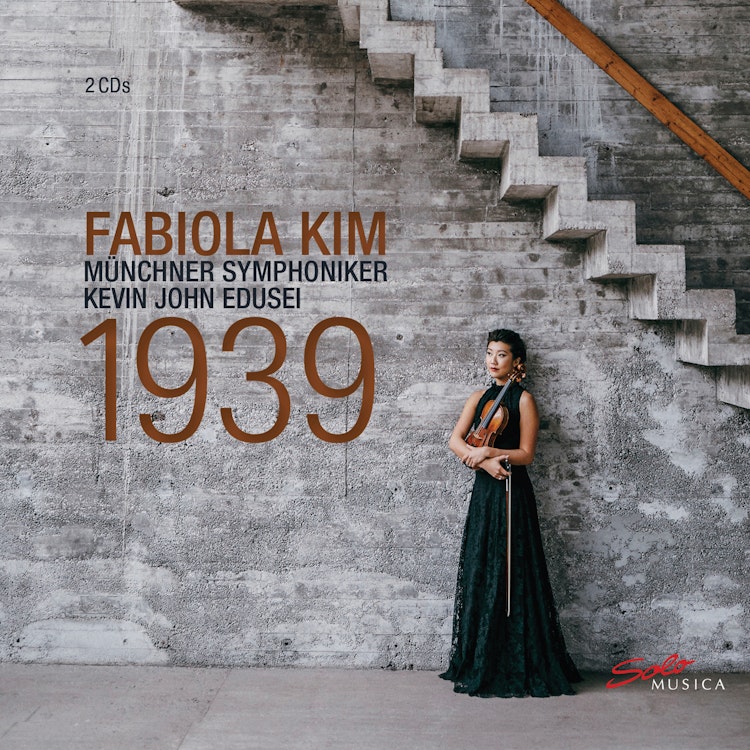
Three violin concertos dating from the fateful year 1939 are performed by Fabiola Kim and the Munich Symphony Orchestra conducted by Kevin John Edusei. William Walton and Béla Bartók wrote their virtuosic concertos for Jascha Heifetz and Zoltán Székely, while Karl Amadeus Hartmann's Concerto funebre is an outwardly darker work. The three concertos reveal contrasting moods from Europe on the brink of war.
Featuring
Kevin John Edusei
Fabiola Kim
Münchner Symphoniker
Sir William Walton
Karl Amadeus Hartmann
Béla Bartók
Did you know?
1/7
Composition History
William Walton's Violin Concerto was commissioned by the famous violinist Jascha Heifetz, who was delighted with the work after its premiere.
Composer Biography
Béla Bartók, a Hungarian composer, foresaw the coming war and expressed his distress over the political situation in Europe, considering emigration.
Composition History
Béla Bartók's Violin Concerto No. 2 was commissioned by violinist Zoltán Székely, who initially insisted on a 'classical' concerto, leading to an elegant compromise in the final work.
Performer Biography
Fabiola Kim, the violinist on this album, made her concerto debut with the Seoul Philharmonic Orchestra at the age of seven, three years after starting her studies.
Compositional Technique
Karl Amadeus Hartmann's 'Concerto funebre' incorporates motifs from the 1420 'Hussite Chorale' ('Die ihr Gottes Streiter seid'), a significant battle hymn, played with restraint by the solo violin.
Composer's Artistic Vision
Karl Amadeus Hartmann conceived his 'Concerto funebre' as funeral music, dedicating it to his son Richard and intending it to express confidence against the dire outlook for spiritual matters in 1939.
Historical Context
The album's title, "1939 Before the great global conflagration," refers to the year when all three concertos were composed, a time of increasing political tension in Europe leading up to World War II.
You might also enjoy...
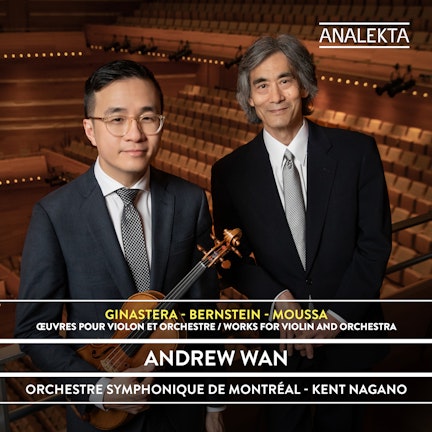
Ginastera – Bernstein – Moussa: Works for Violin and Orchestra
Glass: Violin Concerto / Rorem: Violin Concerto (1984) / Bernstein: Serenade After Plato's "Symposium" (1954) For Solo Violin, String Orchestra, Harp And Percussion
Kernis: Air for Violin; Barber: Violin Concerto; Bloch: Baal Shem; Walton: Violin Concerto