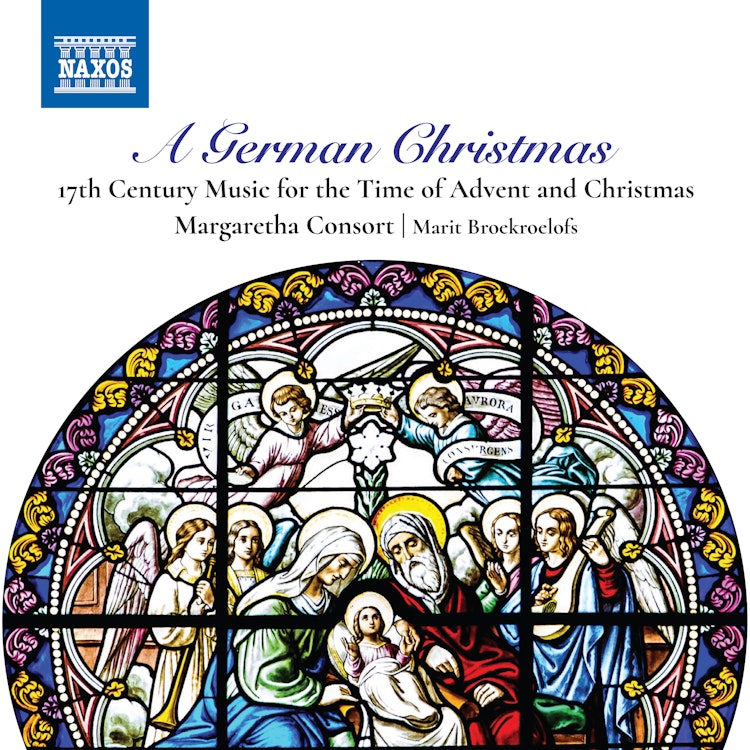
This album was recorded in the Oude Helena Church in Aalten, Netherlands, a spacious pseudo-basilica with generous acoustics, using carefully positioned miniature microphones to capture the 17th-century music's character.
Composer's Artistic Vision
Martin Luther (1483-1546), a key figure in the Reformation, believed the gospel should be heard in both text and music, advocating for congregational singing, mixed choirs, and organ music.
Historical Context
In the 17th century, the organ was an integral part of musical life, with its impassive tone expressing the non-temporality and supra-personal ideals of the Baroque era.
Cultural Impact
Many of the carols by 17th-century Lutheran composers like Michael Praetorius, Heinrich Schütz, and Hans Leo Hassler are still sung today, especially during Advent and Christmas.
Performer Biography
Marit Broekroelofs, the artistic director of Margaretha Consort, is a baroque cellist and violist who dedicated herself to Early Music during her studies.
Interpretation
Seventeenth-century musicians had great freedom in choices of ensemble, tempo, and ornamentation, meaning no two performances of this music sound the same.
Composition History
Martin Luther (1483-1546) initiated a new tradition by writing hymns that could be sung by the congregation, translating Latin songs into German and composing new texts.
You might also enjoy...
Birds on Fire - Jewish Music for Viols
Luz Y Norte
Orchestral Works
Adagio: A Consideration of a Serious Matter
Campo: Quintetto Vicento / Flaherty: Good Times / Kohn: San Gabriel Set / Heussenstamm: Largo
Luz y Norte
Boris Yoffe: Song of Songs
Dowland, J.: Lachrimae, or Seven Tears / Trabaci, G.M.: Consonanze Stravaganti / Frescobaldi, G.A.: Capriccio Di Durezze
Spanish Dances
A Candle in the Dark - Elizabethan Songs & Consort Music