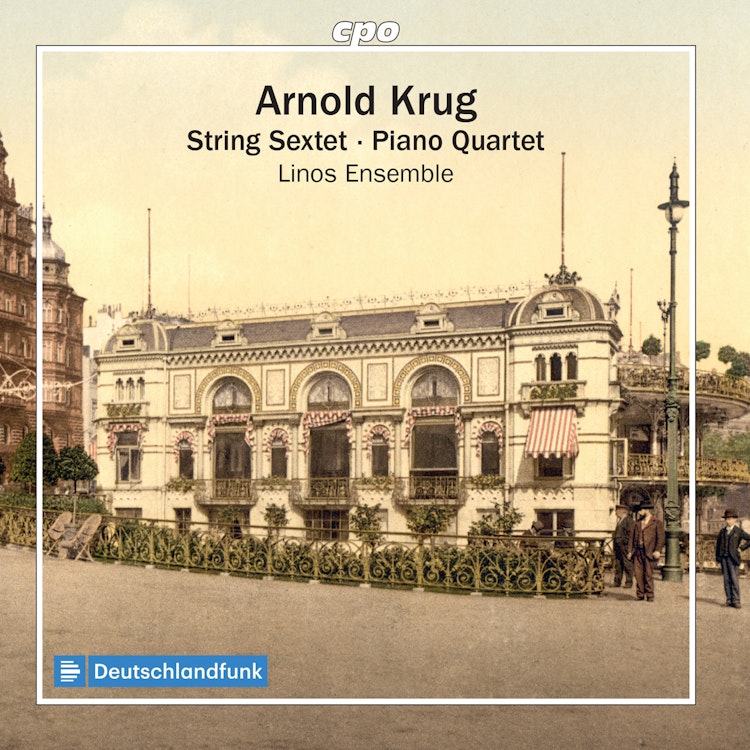
Krug's Piano Quartet in C minor, Op. 16, was composed after his return from Italy in 1878-79, where he had completed his composition studies in Rome and received the title 'Maestro Compositore'.
Performer Biography
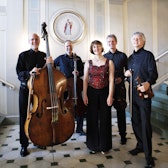
The Linos Ensemble, founded in 1977 by oboist Klaus Becker, has released over 40 critically acclaimed and award-winning recordings, including an ECHO Klassik award in 2017.
Composition History
Krug's String Sextet, Op. 68, was a 'Prize Sextet' that won a competition in 1896 to create literature for new string instruments, the violetta and cellone, invented by Alfred Stelzner.
Composer's Artistic Vision
Krug's dramatic structure in the Piano Quartet embodies the idea of 'Per aspera ad astra' (through adversity to the stars), where a 'negative' principle gives way to a 'positive' outcome.
Compositional Technique
To ensure wider distribution for his String Sextet, Krug or his publisher shrewdly included substitute parts for standard instruments (a second viola and cello) in addition to those for the new violetta and cellone.
Compositional Technique
The finale of Krug's Piano Quartet depicts the revelries of the Roman Carnival, while the third movement, 'Nocturnal Ride', is ghostly and demonic, both movements prefixed with mottos from Victor von Scheffel's poetry.
Composer Biography
Arnold Krug, a contemporary of Brahms, was born in Hamburg and made the city the center of his artistic activities, unlike his more famous colleagues.
You might also enjoy...
Ataç Sezer: Simultaneity (Live)
Philip Sawyers: Double Concerto for Violin & Cello
Abhanden
Homage
The Golden Age of Hollywood, Vol. 4
Igor Raykhelson: Piano & Chamber Music, Vol. 2
Kenins, T.: Cello Sonata / Concertante for Flute and Piano / Piano Quartet No. 2