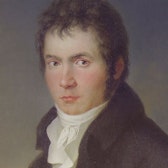
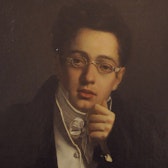
The Habsburg emperors showed personal commitment to music over generations, recruiting musicians from across Europe and making the court musical establishment world-class.
Historical Context
From the 14th century, Vienna had a rich musical life, with the Brotherhood of St Nicholas regulating musical rules, training, standards, and morality.
Historical Context
Under Emperors Joseph I and Charles VI, the imperial court chapel (Hofkapelle) reached its peak, comprising 300 musicians.
Historical Context
Wealthy aristocratic families in Vienna, such as the Esterházy, Liechtenstein, and Lobkowitz, became patrons of music, supporting composers like Gluck, Haydn, Mozart, and Beethoven.
Historical Context
Viennese Classical composers like Gluck, Haydn, Mozart, and Beethoven aimed to use art to touch all human beings, finding a language that spoke directly to everyone's heart.
Historical Context
In the 19th century, bourgeois musical culture in Vienna flourished, with widespread pianoforte playing, waltzing, popular Viennese songs, and endless concerts and balls.
You might also enjoy...
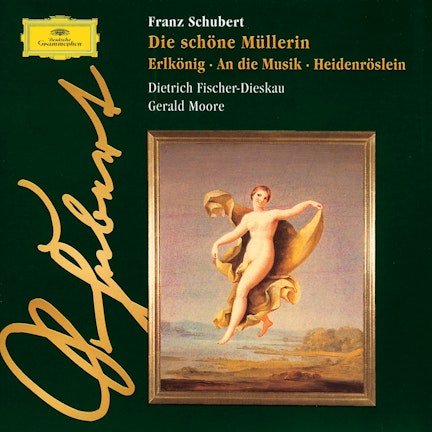
Schubert: Die schoene Muellerin · Erlkoenig · An die Musik · Heidenroeslein