The name 'tonus peregrinus' refers to an ancient plainchant psalm tone, meaning 'wandering tone' due to its different starting notes, and also known as 'tonus novissimus' or 'newest tone'.
Composer Biography
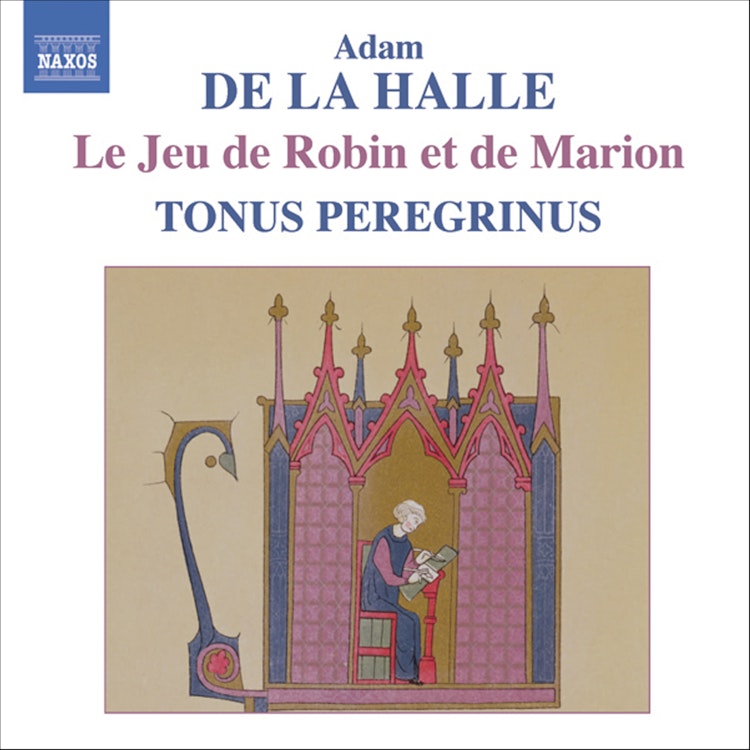
Adam de la Halle, a 13th-century trouvère, was also known as Adam d'Arras and Adam le Bossu, the latter meaning 'the Hunchback', though he claimed it was a name, not a description.
Performer Biography
TONUS PEREGRINUS, the ensemble on this recording, won a prestigious Cannes Classical Award for their debut release of Arvo Pärt's Passio.
Compositional Technique
The recording incorporates plainchant and Adam de la Halle's motets, such as the tonus peregrinus chant and a motet based on the Viderunt omnes chant, to reference older musical traditions.
Historical Context
Le Jeu de Robin et de Marion may have been first performed in the late 1280s at the French Angevin court at Naples, where Adam de la Halle was in courtly circles.
Interpretation
This recording uses a multi-layered approach for modern audiences, with a narrator in original French on the left stereo channel and singers providing a contemporary English interpretation on the right.
Composition History
Adam de la Halle's Le Jeu de Robin et de Marion is considered perhaps the earliest surviving combination of music and secular drama, making it the first opera.
You might also enjoy...
Música Andalusí (Los Cinco Mizán de La Música Andalusí-Magrebí Nuba al-Istihlal)