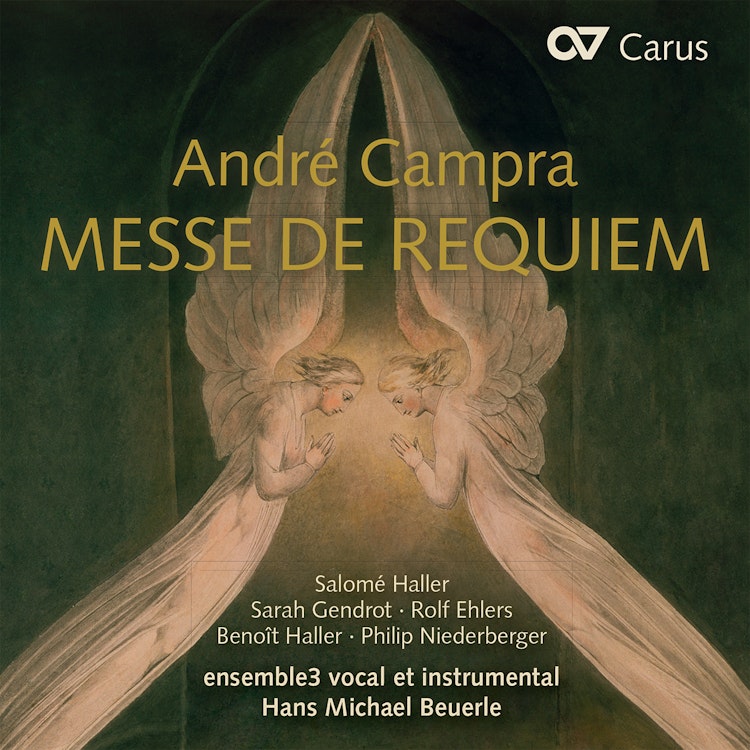
The Messe de Requiem incorporates a carillon motif, often heard in funeral music, at four points, echoing the tolling of bells in a large city like Paris.
Compositional Technique
In the Offertory of the Messe de Requiem, Campra uses a theatrical effect, similar to Lully's 'Chœur des Trembleurs' from Isis, to depict the dead trembling before the King of Glory.
Composer Biography
André Campra, born in Aix-en-Provence in 1660, began his musical career as a choirboy at Saint-Sauveur Cathedral.
Composition History
Campra's Messe de Requiem may have been composed or sung in 1724 for a ceremony in memory of Philippe d'Orléans, who had consistently promoted Campra's career.
Composer Biography
Campra had to resign from his coveted post as Kapellmeister at Notre-Dame de Paris due to the immense success of his opéra-ballet L'Europe galante, which was deemed incompatible with his church position.
Composition History
The Messe de Requiem is one of Campra's most enigmatic works, with no definitive documentation found regarding its origin, date of composition, or first performance.
Recording & Production
The conductor, Hans Michael Beuerle, passed away on January 15, 2015, just two and a half months after this CD recording was made.