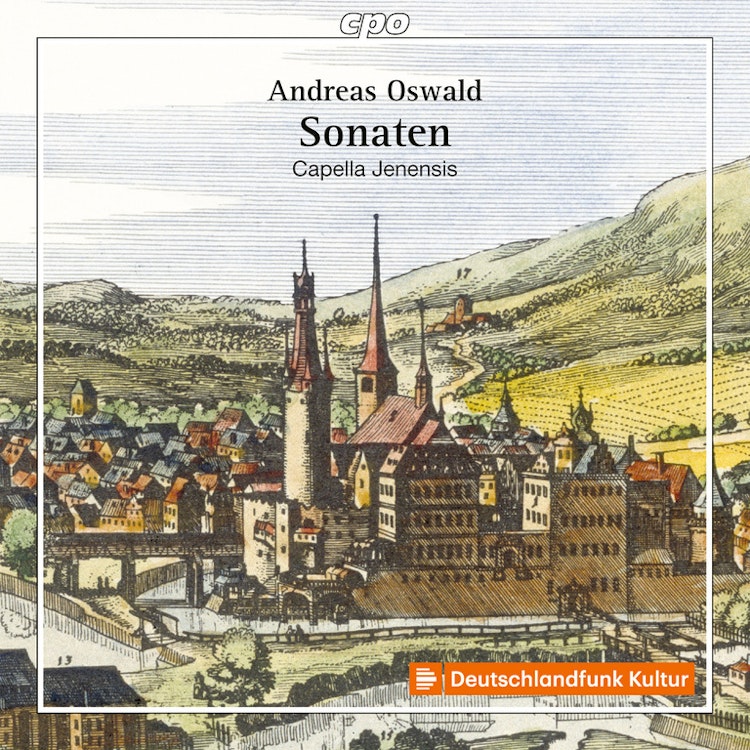
After his patron, Duke William IV of Saxe-Weimar, died in 1662, Andreas Oswald the Younger unexpectedly lost his livelihood when the new regent dissolved the court chapel.
Historical Context
Oswald's childhood and youth were marked by the Thirty Years' War, which severely impacted the Central German principalities with hardship, military activity, and plague outbreaks.
Composer Biography
Andreas Oswald the Younger, the composer of these sonatas, was born in Weimar in 1634, the eldest child of the court organist and chamber musician of the same name.
Composer's Artistic Vision
Oswald's compositions demonstrate an ambitious adoption of the modern Italian virtuoso instrumental style, reflecting the flourishing musical life in Central German courts after 1650.
Composer Biography
Andreas Oswald the Younger died in Eisenach in August 1665 at the young age of just thirty.
Composition History
Most of Oswald's surviving compositions are found in the Partiturbuch Ludwig, a manuscript compiled by Gotha court musician Jacob Ludwig, which was completed in 1662.
Compositional Technique
Oswald frequently used trumpet-like fanfare motifs to create a festive and regal impression, a stylistic device that was exclusive and appealing when trumpet sounds were reserved for the upper classes.
You might also enjoy...
Legrenzi : La Cetra (Sonate a due, tre e quattro stromenti Op. 2 & 10)
Telemann: Paris Quartets, Vol. 1
Telemann: Paris Quartets
Biber: Sonatas Appropriate To the Altar or the Court (Sonatae Tam Aris Quam Aulis Servientes)