Bach's "Actus Tragicus" (BWV 106) features an archaic and reduced instrumentation of two recorders and two viols, besides the continuo, which were instruments typically associated with the evocation of death.
Performer Biography
Alia Mens, the ensemble on this recording, performs on historical instruments under the direction of Olivier Spilmont.
Composition History
The cantata "Aus der Tiefen rufe ich, Herr, zu dir" (BWV 131) is considered one of Bach's very first compositions, written when he was around 22 years old.
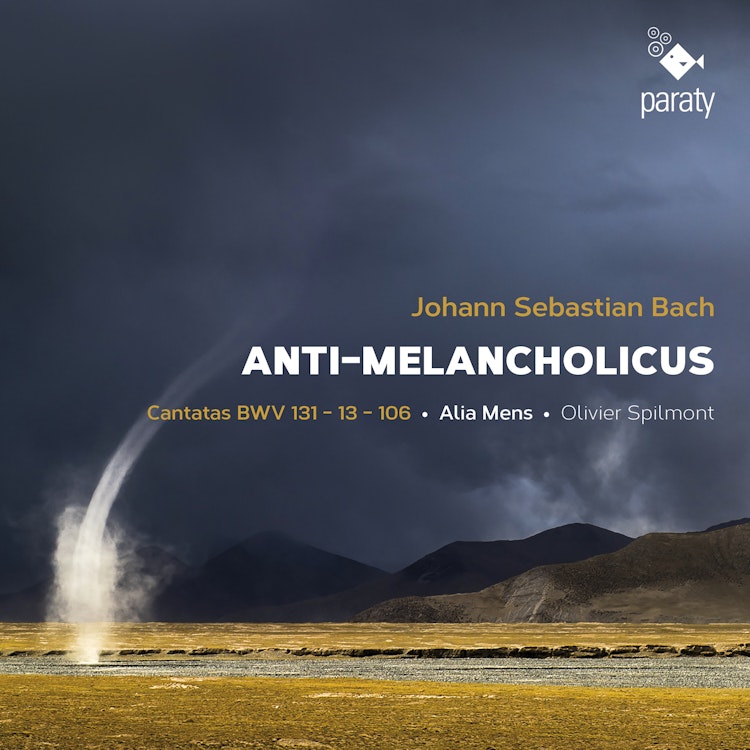
Album & Artwork
The album title, "Anti-Melancholicus," comes from a theological work by August Pfeiffer that Bach owned and noted in his personal library.
Compositional Technique
In the cantata BWV 13, "Meine Seufzer, meine Tränen," Bach uses specific musical elements like chromaticism, wide-leaping intervals, diminished harmonies, and 'sigh' motifs to express profound distress.
Compositional Technique
Bach's cantata BWV 131, "Aus der Tiefen rufe ich, Herr, zu dir," uses an unusual instrumentation with only one violin part against two violas, reflecting an older German tradition.
Composer's Artistic Vision
For Bach, music was not primarily for aesthetic pleasure but for spiritual delight, aiming to transform the listener, much like the Pythagoreans believed music could guide souls.