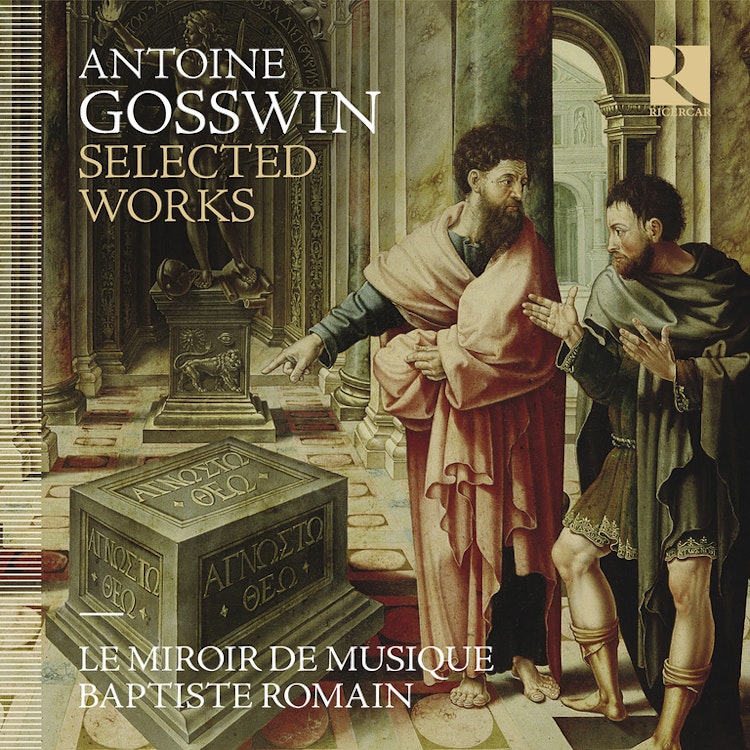
Massimo Troiano, a singer, composer, and chronicler at the Munich court, praised Anthonius Gosswin's exceptional sense of composition and his ability to sing the contralto part with 'infinite lightness and grace'.
Recording & Production
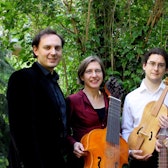
The instrumental ensemble for this recording, including citterns, harps, violins, cornets, shawms, and trombones, was inspired by sculptures of cherubs playing instruments in Freiberg Cathedral in Saxony.
Compositional Technique
Anthonius Gosswin's motets Ad te levavi and Laetatus sum break from the traditional contrapuntal style of Franco-Flemish composers by using homorhythmic vertical textures and dividing voices into groups, imitating the Venetian technique of cori spezzati (divided choir).
Composition History
Most of Anthonius Gosswin's masses are 'parody masses', meaning they reuse material from pre-existing works, such as his Missa Cognovi Domine which is based on a motet by Orlando di Lasso.
Composer Biography
Anthonius Gosswin, a composer from Liège, was recruited to the Bavarian court between 1556 and 1558, where he sang alto in the ducal chapel.
Instruments
The recording features a cittern, a pear-shaped instrument with metal strings played with a goose feather, which was popular in German-speaking countries and delighted the Duke of Bavaria and Archduke Ferdinand of Tyrol.
You might also enjoy...
An Elizabethan Christmas: Byrd, Holborne, Gibbons, Peerson, Weelkes
Das Glogauer Liederbuch (The Glogau Song Book)
Vinders: Missa Myns liefkens bruyn ooghen & Missa Fors seulement
Musik für San Marco in Venedig/Musique Pour Saint Marc De Venise/Music For San Marco In Venice
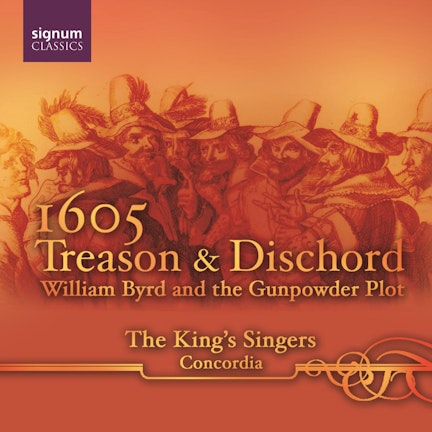
1605 Treason and Dischord: William Byrd and the Gunpowder Plot
1605 Treason and Dischord: William Byrd and the Gunpowder Plot
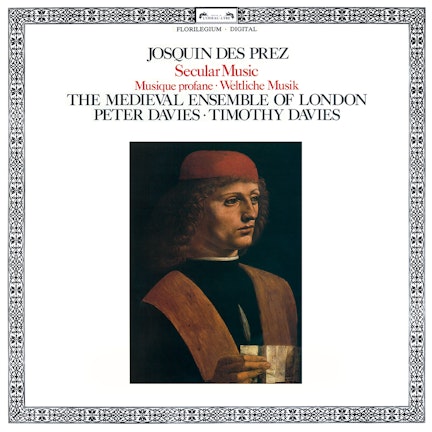
Josquin Desprez: Secular Music
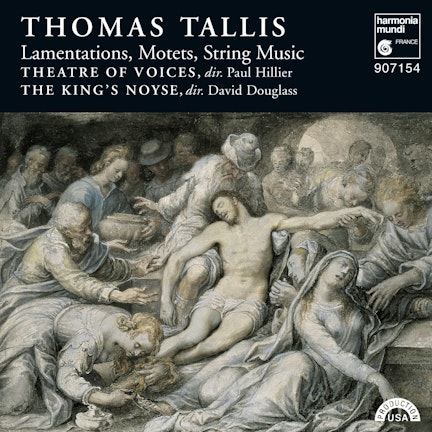
Thomas Tallis: Lamentations, Motets & String Music
Adieu m'amour. Chansons et motets de Guillaume Dufay