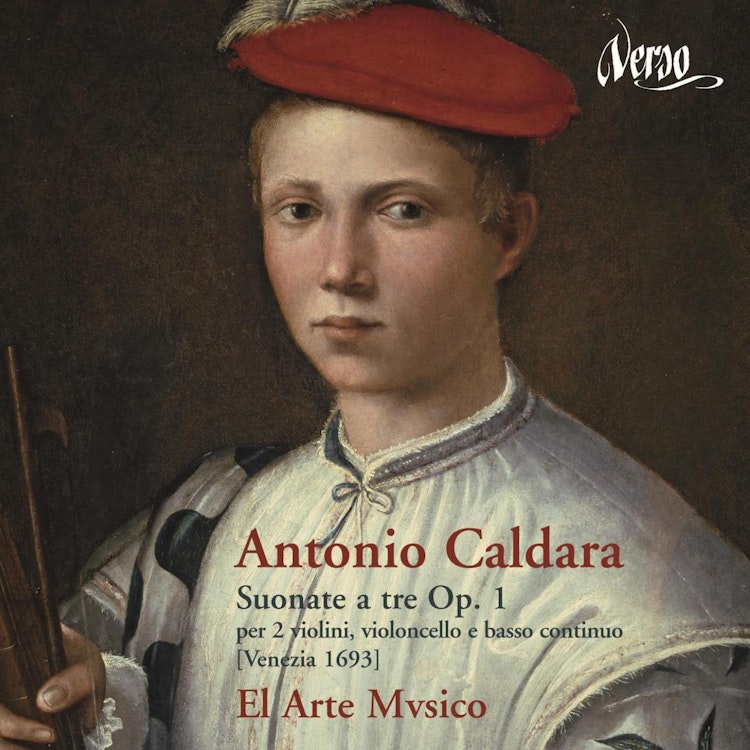
El Arte Mvsico, the ensemble on this recording, was founded in Spain in 2003 and specializes in the historical performance of 17th and 18th-century string repertoire.
Historical Context
In the 17th century, the Most Serene Republic of Venice was a rich and influential musical center, with music thriving in churches, monasteries, schools, hospitals, palaces, theaters, and even on platforms in canals.
Compositional Technique
These sonatas by Antonio Caldara are classified as 'sonata da chiesa' (church sonatas), written in an older style with counterpoint and complex harmony in slow movements, following the four-movement structure established by Arcangelo Corelli.
Composition History
Antonio Caldara's Suonate a tre Op. 1 were his first published collection, printed in Venice in 1693, and were dedicated to Count Roberto Antonio Martinengo of Malpaga.
Historical Context
St. Mark's Basilica in Venice had its own musical identity, not following the Roman Catholic rite but rather that of Aquileia, which was more joyous and included music and dance.
Composer Biography
Antonio Caldara, the composer of these trio sonatas, was trained at St. Mark's Basilica in Venice and began his musical instruction with his father, violinist Giuseppe Caldara.
Instruments
In St. Mark's Basilica, the harpsichord was used instead of the organ during Holy Week, as the organ was considered a festive instrument and its use was expressly forbidden during that period.
You might also enjoy...
Telemann: Violin Sonatas
Vivaldi: Sonate e concerti per flauto traverso
D. Scarlatti: Venezia 1742
Corelli In London
Accademia dell' Arcadia - Musica Restituta: Benedykt Cichoszewski