In 'Sechzig Schemen', Apostel used a musical anagram of Alfred Kubin's name (A F E D B) and his own name (H A Es E C H A Es E) as motifs.
Composer's Artistic Vision
Apostel, a proponent of absolute music, emphasized the formal aspects of visual art, sketching out musical works like an architect's plan or a 'cardiogram'.
Compositional Technique
For his 'Zehn Variationen über ein eigenes Thema', Apostel used a dynamic series, anticipating developments in serial music like Messiaen's 'Mode de valeurs et d'intensités'.
Composer Biography
Hans Erich Apostel, the composer, was a pupil of Arnold Schoenberg from 1921 and also studied with Alban Berg starting in 1925.
Composition History
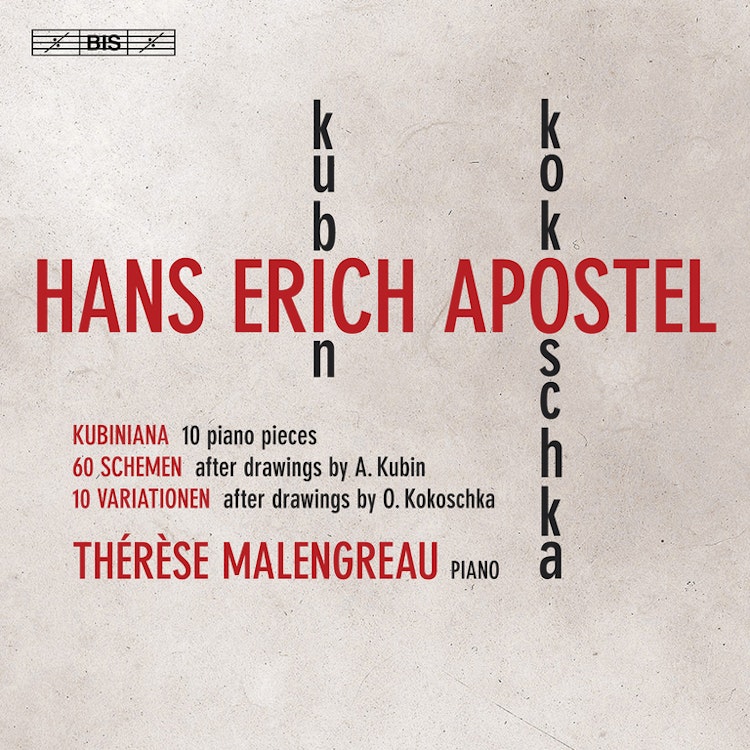
The album features three piano works by Hans Erich Apostel, all inspired by artwork from Oskar Kokoschka and Alfred Kubin.
Composition History
Apostel dedicated his 'Kubiniana' and 'Sechzig Schemen' to Alfred Kubin, an artist 24 years his senior, with whom he corresponded regularly.
Historical Context
Apostel's music was labeled 'degenerate art' by the Nazi regime, leading to its rarity in performance even today.
You might also enjoy...
Paul Creston: Piano Music
Kodaly, Z.: 7 Piano Pieces, Op. 11 / 9 Piano Pieces, Op. 3 / Meditation Sur Un Motif De Claude Debussy / Valsette