Fugue technique creates connections between a leading voice (subject) and a following voice (answer) by imitating intervals and rhythms.
Compositional Technique
The modern string quartet faces challenges with counterpoint due to the 2nd violin and viola often playing in uncomfortably low ranges, a legacy from earlier ensemble configurations.
Performer Biography
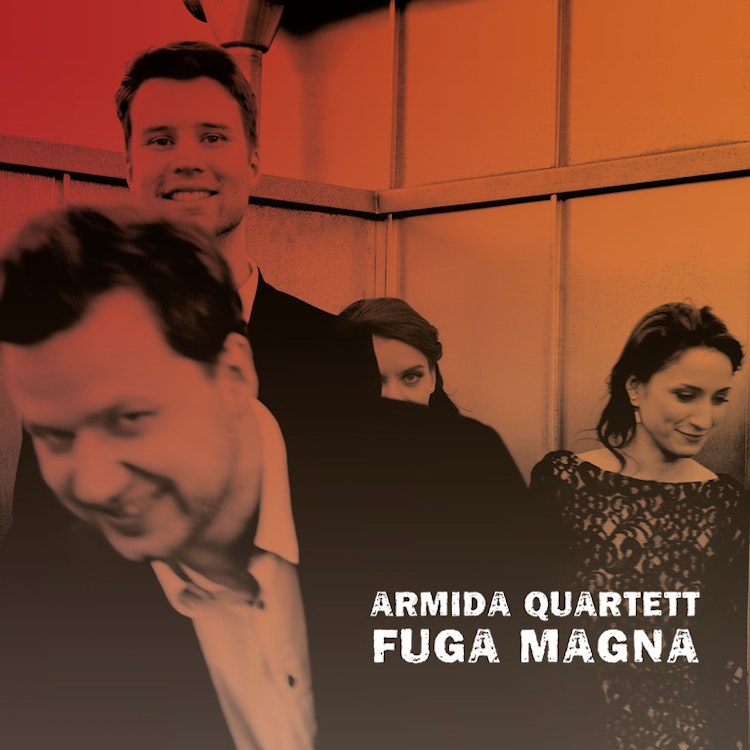
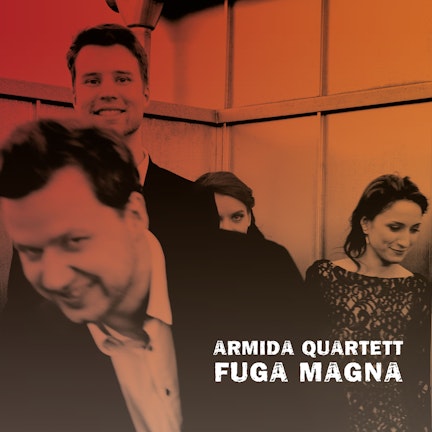
The Armida Quartet, founded in Berlin in 2006, is named after an opera by Joseph Haydn, who is known as the 'father of the string quartet'.
Composition History
Johann Sebastian Bach's "Art of Fugue," though unfinished and intended for keyboard, was performed on string instruments even in the 18th century due to its non-instrument-specific writing.
Composition History
Alessandro Scarlatti, composer of four sonatas on this album, specified they be performed "senza cembalo" (without harpsichord), leading some to consider them early string quartets.
Historical Context
In 1753/54, Berlin music theoretician Fr. W. Marpurg published his "Treatise on Fugue," demystifying fugue composition by showing it could be mathematically planned.
Historical Context
Around 1600, the 'church style' or stile antico, an elaborate compositional method, was differentiated from newer madrigal and affect-based styles.
You might also enjoy...
Fuga Magna
Beethoven: Complete String Quartets
Hommage
Beethoven: The String Quartets in under 10 minutes
Wendling & Wittenberg Quartetts: The Complete Recordings
Beethoven : String Quartets
Hagen Quartett: 30
Hagen Quartett: 30
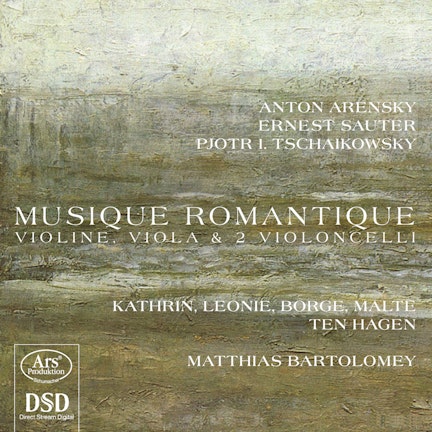
Musique romantique
String Quartets - Beethoven, L. Van / Haydn, F.J. / Mozart, W.A. / Schubert, F. / Janacek, L.