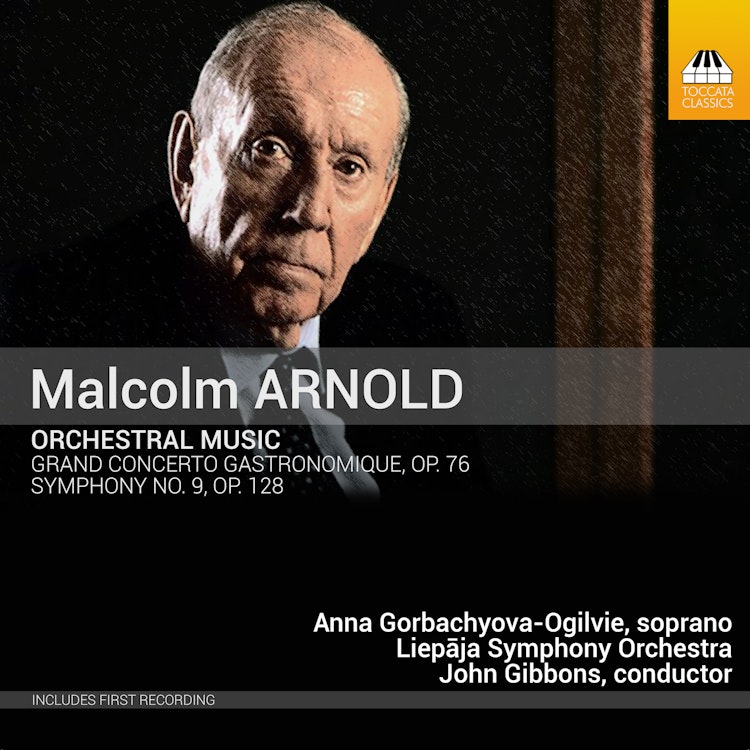
The Grand Concerto Gastronomique includes 'food' as one of its soloists, with the third movement, 'Roast Beef', requiring the plate of food to be 'enormous' and repeated until all is finished.
Composition History
Malcolm Arnold's Symphony No. 9 was composed after a period of debilitating illness and a catastrophic breakdown following a suicide attempt, representing a sudden resurgence of creativity.
Composition History
The Grand Concerto Gastronomique was written in 1961, the same year as Malcolm Arnold's Fifth Symphony, and was influenced by the untimely death of Gerard Hoffnung, a musician, cartoonist, and comic genius.
Performer Biography
The Liepāja Symphony Orchestra, featured on this album, is the oldest symphonic ensemble in the Baltic states, founded in 1881.
Recording & Production
This recording of the Grand Concerto Gastronomique is its first ever, demonstrating that the work can be enjoyed for its musical pleasures alone, despite the importance of staging to its humor.
Composer's Artistic Vision
Malcolm Arnold described his Ninth Symphony as 'an amalgam of all my knowledge of humanity', aiming for a purity and directness of expression.
Compositional Technique
Arnold's Symphony No. 9 is unusual in its symphonic cycle for ending with a slow movement, a choice influenced by works like Tchaikovsky's Sixth and Mahler's Ninth symphonies.
You might also enjoy...
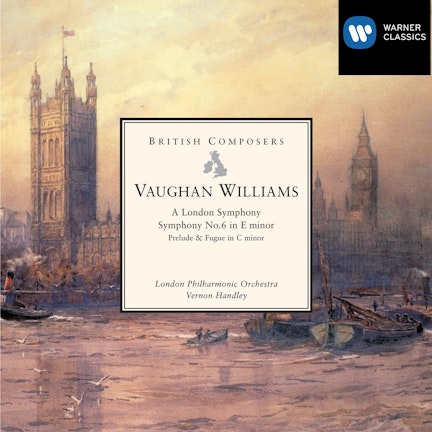
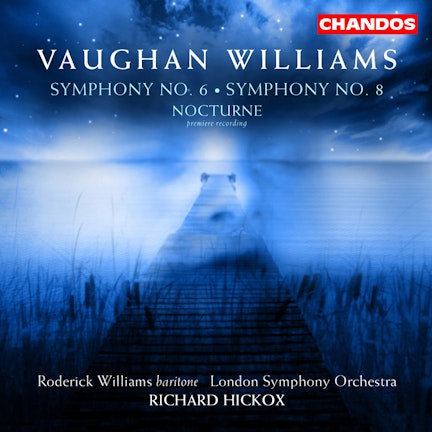
Vaughan Williams: A London Symphony, Symphony No. 6 in E minor etc
Vaughan Williams: The Complete Symphonies, The Lark Ascending, Tallis Fantasia, etc.