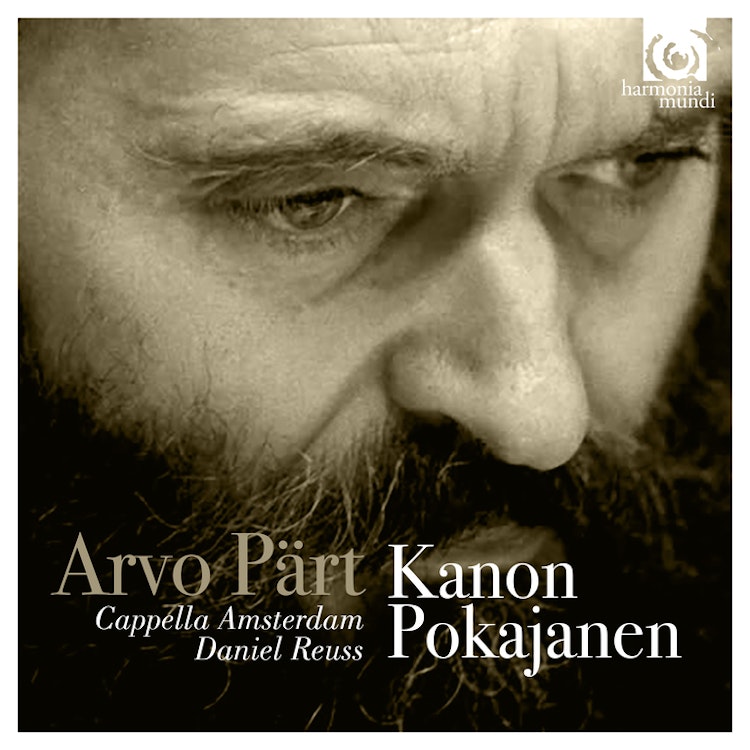
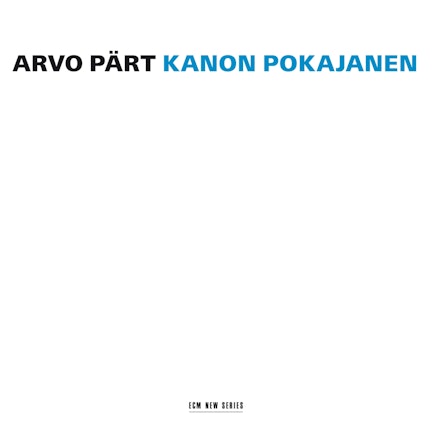
Arvo Pärt intended the Kanon Pokajanen to be a concert work, but chose a mixed a cappella choir to conform to Orthodox liturgy, which permits no instruments other than the human voice.
Composition History
Kanon Pokajanen was commissioned for the 750th anniversary of Cologne Cathedral and took over two years to compose.
Recording & Production
This recording was made in September 2015 at Vaalse Kerk, Amsterdam, with Florian B. Schmidt as artistic director and editor, and Aki Matusch as sound engineer.
Composer Biography
Arvo Pärt, the composer, converted to the Orthodox faith in the early 1970s, which inspired many of his religious works.
Composer's Artistic Vision
In Kanon Pokajanen, Arvo Pärt aimed to give the word 'the freedom to choose its own sound, to draw its own melodic line,' immersing the music in the character of Church Slavonic.
Compositional Technique
The Kanon Pokajanen is one of the rare musical settings of a 'canon' (kānon), a poetico-liturgical genre from the Byzantine era.
Compositional Technique
Pärt's style in this work uses insistent repetitions, long silences, and a slow tempo, evoking monastic chant and his famous 'tintinnabular' (bell-like) harmony.
You might also enjoy...
The Souls Of The Righteous Are In The Hand Of God
Silvestrov: Maidan 2014 / Cycle I: III. Give Rest, O Christ, to Thy Servant
Briggs: God Be in My Head
Constantinides, D.: Marcha De Galvez / I Never Saw A Moor / Rights of Freedom
Stephen Paulus: Wishes and Candles
Arvo Pärt: Kanon Pokajanen
Orphic Songs for sixteen mixed voices a cappella choir
Beat Furrer: Enigma (Excerpts)
Daley: Grandmother Moon
Whitacre: The Seal Lullaby
Pärt: Kanon Pokajanen
Holliger: Die Jahreszeiten
Richard Pantcheff: African-Caribbean Elegy, Op. 70