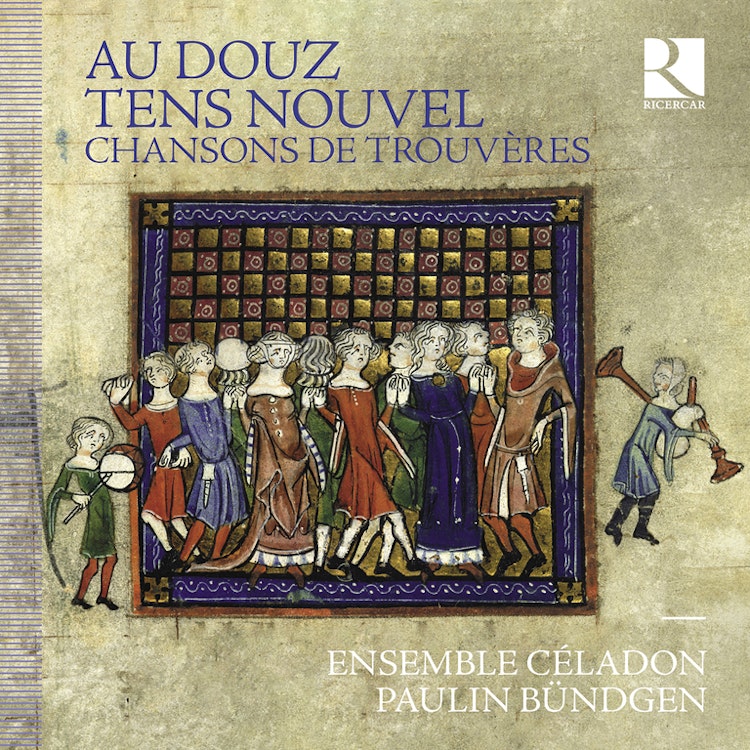
The concept of 'fin'amor' or courtly love, where a poet serves an inaccessible lady, was invented by troubadours in the late 11th century and later adopted by trouvères north of the Loire.
Interpretation
The Céladon Ensemble chose to complete fragmentary works and texts that survived without music, effectively becoming 'trouveurs' themselves.
Recording & Production
This album is the third installment in a trilogy by the Céladon Ensemble exploring courtly love in the Middle Ages, following 'Nuits Occitanes' and 'Under der Linden'.
Composer's Artistic Vision
The medieval aristocracy expressed itself in poetic terms, not only for taste but also because it gave them a reputation for having a 'bel esprit' (a beautiful mind).
Compositional Technique
The album features instrumental pieces created by the Céladon Ensemble, based on melodic material borrowed from existing songs, to form estampies and ductias.
Composer Biography
Thibault de Champagne (1201-1253), a leading musician of his generation with 71 compositions, was also a count and later a king, and the grandson of Marie de France, a patron of arts.
Historical Context
The 12th and 13th centuries in Western Europe, sometimes called the first Renaissance, saw a growth in intellectual and cultural activities, including the transcription of secular music.
You might also enjoy...
La Prima Diva
Thibaut de Champagne: Le chansonnier du roi
Capstone Collection: The McLean Mix: Rainforest Images
Sellitto: Drusilla e Strabone - Intermezzi a due voci
Frangi Cupido i dardi: Cantate per alto e basso continuo del Settecento napoletano