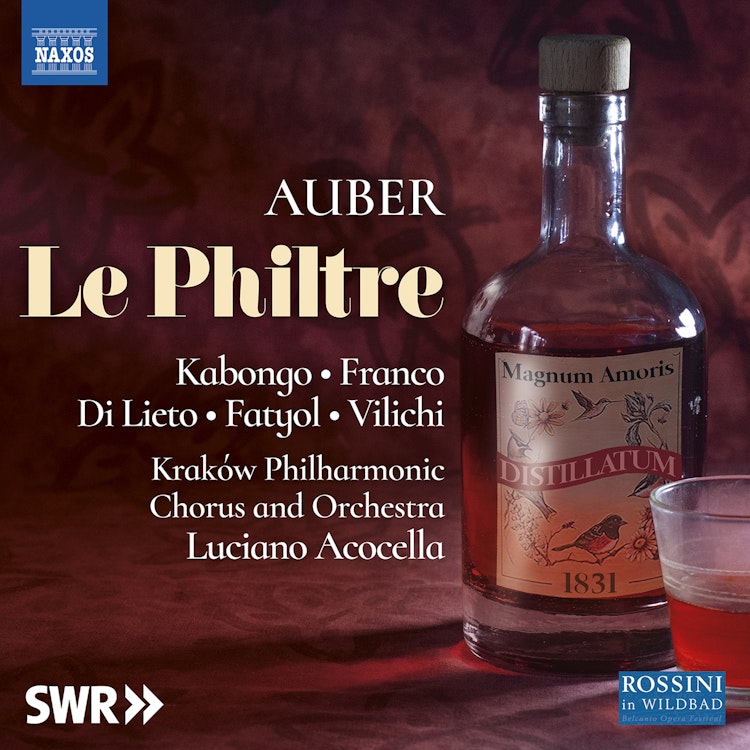
The opera "Le Philtre" blends Italian and French operatic styles, featuring Italianate cavatinas and cabalettas alongside French structural elements like strophic writing and choral dialogues.
Cultural Impact
Auber's "Le Philtre" had an unalloyed success, running until 1849 and revived multiple times for a total of 243 performances, and directly inspired Donizetti's famous opera "L'elisir d'amore."
Composition History
"Le Philtre" is the latest result of a long collaboration between composer Daniel-François-Esprit Auber and librettist Eugène Scribe, which began in 1822.
Notable Performances
The premiere of "Le Philtre" on June 20, 1831, featured star singers of the Académie Royale de Musique, including Adolphe Nourrit as Guillaume and Julie Dorus-Gras as Térézine.
Composition History
Auber's opera "Le Philtre" was written at the peak of his career, following significant recognition including being made a Chevalier of the Légion d'Honneur in 1825.
Historical Context
The story of "Le Philtre" is set in the French Basque Country before 1793, implicitly indicated by the presence of a recruiting sergeant, as compulsory military service was introduced in France that year.
Critical Reception
Critics at the time noted that "Le Philtre" brought a rural setting with ordinary country folk to the Académie Royale de Musique, a venue previously known for grand opera with mythological or historical figures.
You might also enjoy...
Donizetti: La favorita
Verdi: Otello (Recorded 1958)
Bizet: Carmen
Gounod: Le Tribut de Zamora
Mozart: Così fan tutte
GLUCK, C.W.: Orfeo ed Euridice (Opera) [Neumann]
Le Nozze di Figaro
Cherubini: Medea
Verdi: Il Trovatore
Boito: Nerone
Der Schauspieldirektor - The Impressario
Wagner: Das Rheingold (The Rhinegold), WWV 86a [Recorded 1953]