The harpsichord used in this recording was made by Jan Kalsbeek in Zutphen in 2003, modeled after a 1710 instrument by Michael Mietke from Berlin.
Historical Context
During the Baroque period, the representation and arousal of passions, known as 'affects', became the very essence of music, with German theorists making significant efforts to understand this phenomenon rationally.
Compositional Technique
Baroque composers used rhetorical strategies and structures in music, known as 'musical rhetoric' or 'rhetoric-musical figures', to evoke and present desired emotions in the audience, similar to a preacher using spoken word.
Cultural Impact
Martin Luther, the German theologian, believed music was a divine gift and gave it an educational purpose, making it an essential part of the Lutheran Lateinschulen curriculum.
Composer's Artistic Vision
Johann Sebastian Bach, the composer of these harpsichord works, is considered the epitome of Baroque music due to his originality, richness of invention, profundity, purity, and strength.
Album & Artwork
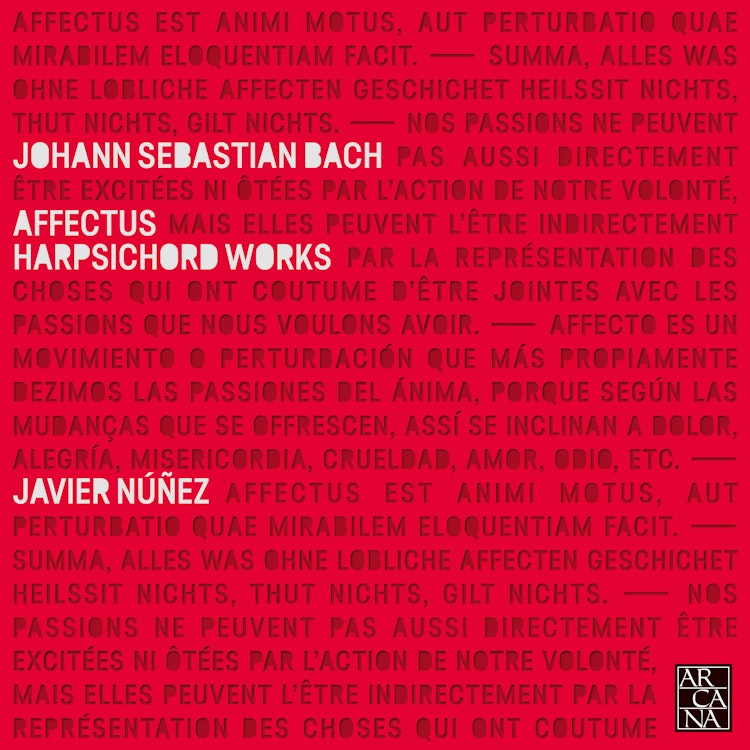
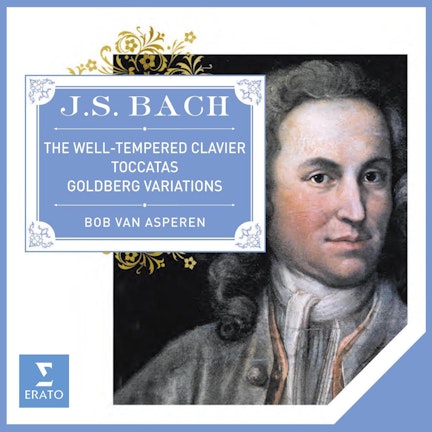
The album's graphic design is a collaboration between Arcana and Atelier(s) Alfonso Femia, an architectural firm, and is based on structural elements from their projects like the Marseille Docks.
Historical Context
Two influential works from the mid-17th century, Descartes's Les Passions de l'âme (1649) and Kircher's Musurgia universalis (1650), explored human passions and their physiological reactions to music, giving rise to 'musica pathetica'.
You might also enjoy...
Handel: Minuets for keyboard, HWV 497-557
J.S. Bach: Fantasia & Fuge
J.S. Bach: Fantasia & Fuge
Bach: Clavier-Übung II & III
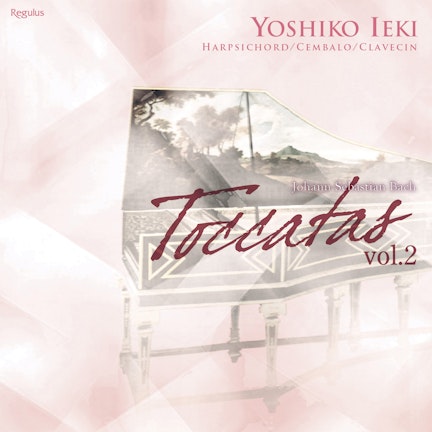
Bach: Toccatas, Vol. 2
Bach Imagine
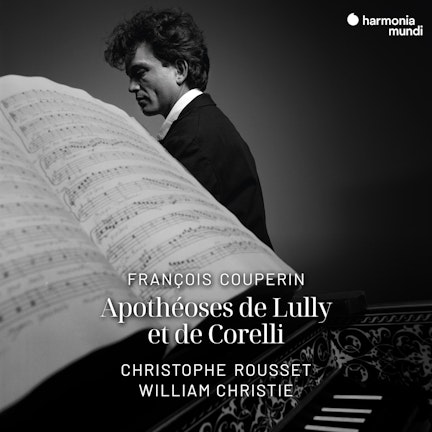
François Couperin: Apothéoses de Lully et de Corelli
Révélations
Bach, JS : Harpsichord Recital
Bach, J.S.: Toccatas, Bwv 910-916
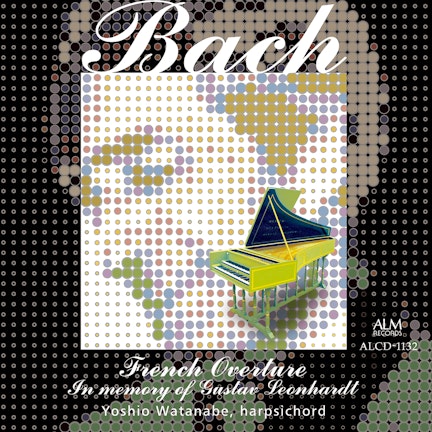
French Overture - In memory of Gustav Leonhardt
Bach: The Well-Tempered Clavier, Goldberg Variations & Toccatas