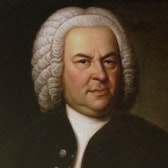
Bach used the cantata "O angenehme Melodei" to persuade Duke Christian of Saxe-Weissenfels to appoint him 'Kapellmeister von Haus aus,' a title he had lost.
Composition History
The two homage cantatas on this album are presented as reconstructions and appear for the first time on disc.
Composition History
The cantata BWV 216a, "Erwählte Pleißenstadt," pays tribute to the city of Leipzig through a dialogue between the gods Apollo and Mercurius.
Composition History
The cantata BWV 210a, "O angenehme Melodei," is perhaps the longest solo cantata Bach ever wrote and explores the divine origins of music.
Composer's Artistic Vision
For Bach, performing these cantatas was an opportunity to earn extra income in Leipzig and expand his artistic activities beyond his duties as cantor at the Thomaskirche and music director at the university.
Composer Biography
During his time in Leipzig, Johann Sebastian Bach cultivated many ties to private music-lovers and patrons, as Leipzig was a prosperous city of merchants and trade fairs.
Composition History
The famous harpsichord contest between Bach and Louis Marchand took place in 1717 at the Dresden residence of Count Joachim Friedrich Graf von Flemming, a patron of Bach.
You might also enjoy...
Maria & Maddalena
Pergolesi: Stabat Mater - Bach: Der Frühling
Bach: Zwei weltliche Kantaten
Rossi: Cantata in onore di S. Antonio da Padova & Lectio quarta