L'Arpa festante, the baroque orchestra on this recording, uses appropriate original instruments for each work's period to faithfully reproduce historical timbres.
Composition History
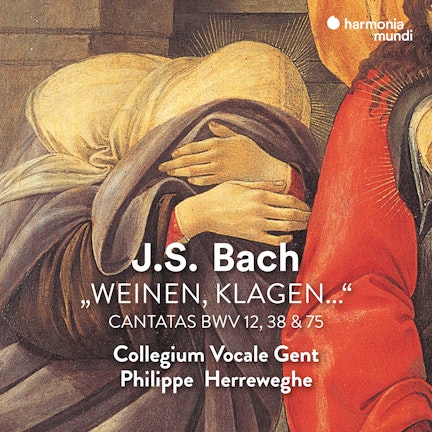
Cantata BWV 12, 'Weinen, Klagen, Sorgen, Zagen', was Bach's second cantata in a series composed for Weimar, first performed on April 22, 1714.
Composer Biography
Salomon Franck, the poet for many of Bach's Weimar cantatas including BWV 12, was a highly esteemed senior consistory secretary at the court, who had studied law and theology.
Performer Biography
Thomas Gropper, the conductor, founded the Arcis Vocalists in 2005 and has been a professor of voice, speech training, and vocal didactics at the Munich Music Academy since 2001.
Compositional Technique
The chorus 'Weinen, Klagen, Sorgen, Zagen' from BWV 12 features a 'lamento bass' that descends chromatically, a technique Bach later used in the 'Crucifixus' of his B minor Mass.
Composition History
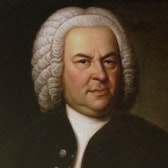
Johann Sebastian Bach was appointed Kapellmeister in Weimar on March 2, 1714, a promotion that required him to compose one cantata per month.
Composition History
Cantata BWV 147, 'Herz und Mund und Tat und Leben', is a reworking of an earlier Weimar cantata from 1716, adapted by Bach for a new occasion in Leipzig in 1723.