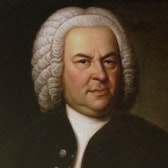
BWV 182, 'Himmelskönig, sei willkommen', shows Bach's early exploration of modern Italian forms, including opera, featuring Da-capo arias and echoes of Vivaldi's concert style.
Compositional Technique
In his early cantatas, Bach often added solo instruments to reinforce the choral singers and give each cantata an individual sound, such as the recorder in BWV 182 and the oboe in BWV 131.
Composition History
BWV 131, 'Aus der Tiefen', is possibly Bach's earliest surviving cantata, likely composed during his time as an organist in Mühlhausen.
Historical Context
The text for BWV 182, 'Himmelskönig, sei willkommen', was written by Salomon Franck, the ducal librarian in Weimar, whom Alfred Dürr considers perhaps the most gifted poetic talent Bach worked with.
Interpretation
This recording of Cantata BWV 131 is performed in A minor, a decision made to avoid oboe problems with low notes and to prevent the choral parts from sounding too low and dull.
Composition History
BWV 182, 'Himmelskönig, sei willkommen', was Bach's first cantata composed for the Weimar court, written for Palm Sunday in 1714.
Performer Biography
L'arpa festante, founded in 1983, is one of Germany's oldest early music ensembles, known for using period instruments to faithfully replicate the sound of historical works.
You might also enjoy...
J.S.Bach - The first Cantata Year - BWV 22 "Jesus nahm zu sich die Zwölfe"
Bach: Ich hatte viel Bekümmernis, BWV 21
Bachkantate, BWV 55 - Ich armer Mensch, ich Sündenknecht
Bachkantate, BWV 147 - Herz und Mund und Tat und Leben (Live)
Bach, JS : Cantates Sacrées BWV Nos 140 & 147
Bach: Cantatas, Vol. 52
J.S. Bach: Wer sich selbst erhöhet, der soll erniedriget werden, BWV 47