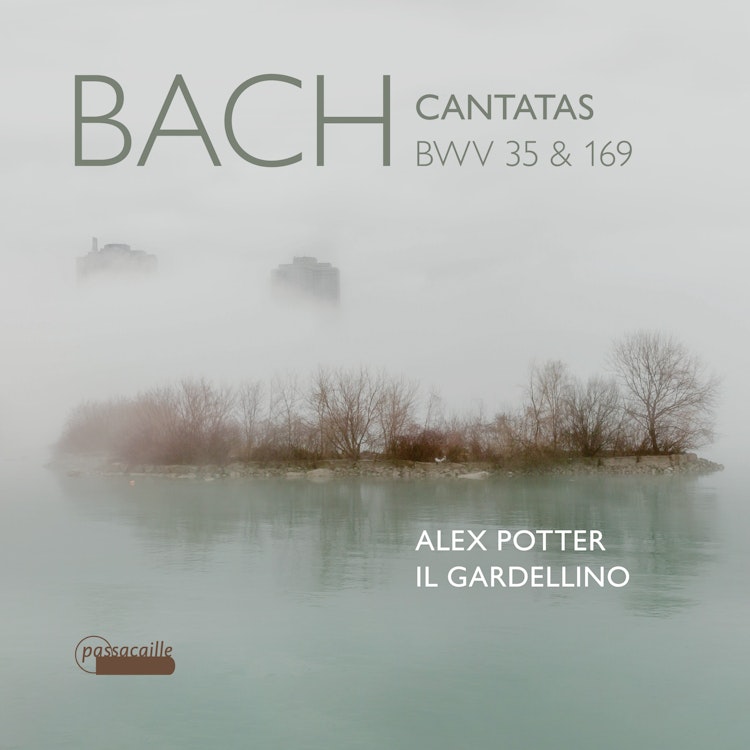
In these cantatas, Bach elevates the organ to a solo role beyond its usual continuo duties, requiring elaborate obbligati and prefatory sinfonias that function as short, self-contained concertos.
Instruments
The Christoph Treutmann organ (1734) used for this recording is one of the finest surviving Baroque instruments, known for its clean, well-blended sound due to housing different 'Werke' in the same case.
Interpretation
Bach's organ parts for the 1726 cantatas are notated a tone lower than other instruments because Leipzig organs were tuned to Chorton (A=466 Hz), while other instruments played at Kammerton (A=415 Hz).
Compositional Technique
Bach frequently repurposed older music for his sinfonias, even if it had no association with the text, such as in Cantata BWV 35, which uses material from a lost oboe concerto.
Composer's Artistic Vision
The solo cantatas from 1726-1727, including those on this recording, show the influence of opera with their highly expressive recitatives and virtuosic arias, rather than Bach's Lutheran background.
Compositional Technique
In his third cantata cycle (1725-1727), Bach began to scale back vocal forces to solo and dialogue cantatas, and instrumental music, including standalone sinfonias, played a more prominent role.
Composition History
When Bach arrived in Leipzig in 1723 as Cantor at the Thomasschule, he composed at least 63 works in his first church cantata cycle, 40 of which were new.
You might also enjoy...
Bach: Come, Sweet Cross (Easter Music I - Passion)
Bach Cantatas conducted by Hermann Scherchen his early Recordings complete
Bach, Buxtehude & Telemann
Christmas with Bach
Bach Bachianas: Music By The Bach Family
Johann Sebastian Bach: Concertos And Sinfonias For Oboe
Johann Sebastian Bach: Ich hatte viel Bekümmernis
Pachelbel's Canon & Other Baroque Favourites
Baroque - The Essentials
Bach: The Essentials
Johann Sebastian Bach: Cantatas BWV 56 (Kreuzstab-Kantate) & 82 ("Ich habe genug")