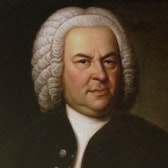
After several successful projects for the label Pentatone including the acclaimed album Transfigured Night, cellist Alisa Weilerstein records all six of Bach’s Cello Suites. This beautiful music is as central to the cello’s repertoire as the Sonatas and Partitas are to the violin’s.
Gramophone Editor's Choice
Featuring
Alisa Weilerstein
Johann Sebastian Bach
Did you know?
1/7
Compositional Technique
The Baroque suite's core components (allemande, courante, sarabande, gigue) were established before Bach, who added an opening prelude and diverse 'modern' dances.
Cultural Impact
The Cello Suites were largely unplayed until Pablo Casals, a cellist, discovered a dusty score in Barcelona in 1890, bringing them to world attention.
Composer's Artistic Vision
Bach's Cello Suites, like his works for solo violin or keyboard, aim to synthesize diverse musical trends and elevate the instrumental genre to its highest level of perfection.
Historical Context
The cello was a relatively new instrument compared to the viola da gamba when Bach composed these suites, offering him a 'blank canvas' for his compositions.
Composition History
The Cello Suites, which survive only in a handwritten copy by Bach's second wife Anna Magdalena, are dated to about 1720, during his time in Köthen.
Compositional Technique
Bach's Cello Suite No. 5 uses an altered scordatura tuning, where the highest string is detuned from A to G, adding an open string for sympathetic resonance.
Instruments
Bach may have composed Cello Suite No. 6 for a five-string instrument, which would have significantly expanded its available range.
You might also enjoy...
Bach: Cello Suites Nos. 1, 3 & 5
Six Evolutions - Bach: Cello Suites
Six Evolutions - Bach: Cello Suites
J. S. Bach: Suites for Violoncello Nos. 4-6, BWV 1010-1012
Bach: Cello Suite No. 1 in G Major, BWV 1007: I. Prélude
Bach, J.S.: Cello Suites Nos. 1-3, BWV 1007-1009 (Jordan) (A New Interpretation Based On Early Sources)
Bach: Six Suites for Solo Cello
J.S. Bach: Cello Suite No. 1 in G Major, BWV 1007: I. Prelude (Live at St. Mary's Cathedral, Tokyo 2026)