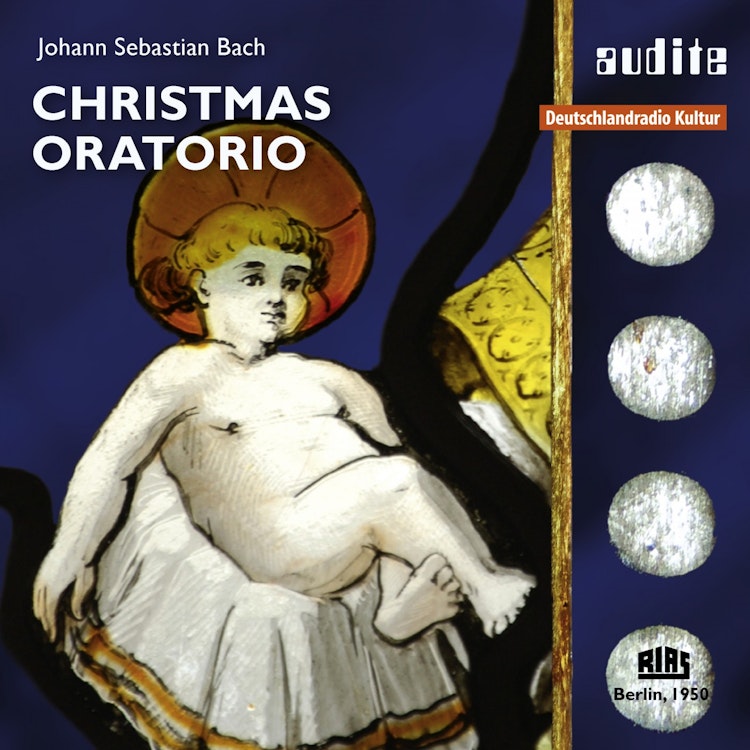
The six-part oratorio corresponds to the festive period of the Twelve Days of Christmas, which are also celebrated as a symbol of a turn of eras.
Recording & Production
This recording of the Christmas Oratorio by Karl Ristenpart was made in only two days in December 1950, an extraordinary feat.
Composer's Artistic Vision
Bach's Christmas Oratorio, describing the emergence of Christianity, is seen as a counterpart to Wagner's 'The Ring of the Nibelung', which depicts the demise of Germanic gods.
Critical Reception
Unlike many of Bach's single cantatas, the Christmas Oratorio has always been present during the relevant season, particularly Parts 1 to 3.
Interpretation
Ristenpart's interpretation of the chorales, with swift tempi and breaths only at textual units, conformed to contemporary reform efforts in congregational singing after Nazi rule.
Performer Biography
Karl Ristenpart, the conductor of this recording, responded to the Nazi accession to power in 1933 by retreating to chamber music, a field less susceptible to state control.
Composition History
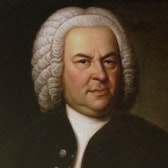
Bach's Christmas Oratorio is a continuous work made up of six separate cantatas, each performed on different days between Christmas and Epiphany.
You might also enjoy...
Leontyne Price - Great Scenes from Gershwin's Porgy and Bess
Songs
Songs
Joseph Schmidt: Ein Lied geht um die Welt (Inspiration)
Joseph Schmidt - The Complete EMI Recordings Vol. 2
My Christmas
Feliz Navidad
Auf den Spuren meiner Väter · René Kollo singt Kollo
The Three Tenors Christmas (international version)