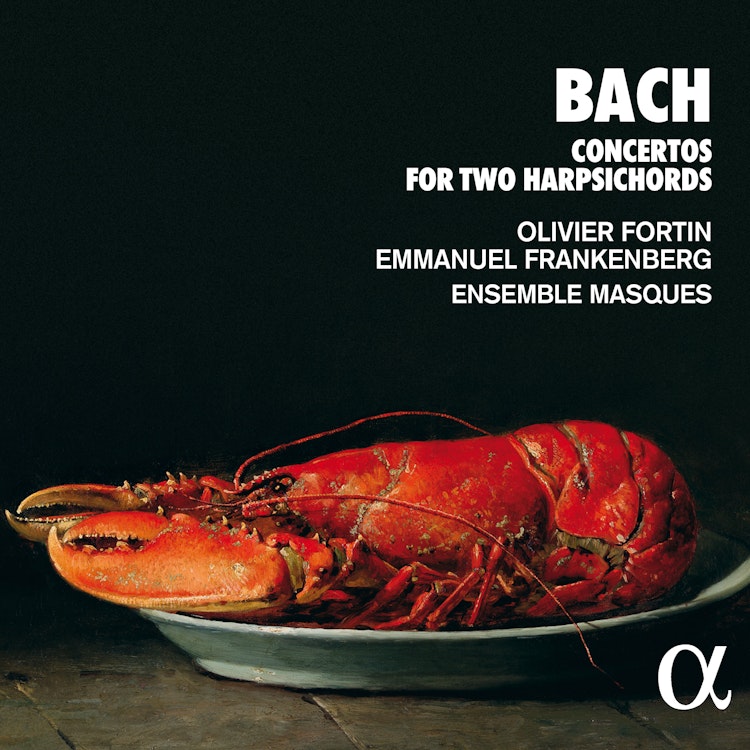
Johann Sebastian Bach wrote three concertos for two harpsichords, BWV 1060-1062, all recorded here. Soloists Olivier Fortin and Emmanuel Frankenberg join Ensemble Masques, with Fortin conducting from the harpsichord. Completing the album is the Prelude and Fugue in E flat for organ, transcribed for two harpsichords in keeping with Bach's own habit of rearranging his music.
Featuring
Emmanuel Frankenberg
Olivier Fortin
Ensemble Masques
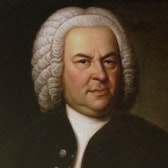
Johann Sebastian Bach
Did you know?
1/7
Historical Context
During the Bach renaissance of the late 18th and early 19th centuries, there was a desire to adapt Bach's challenging organ works for performance in domestic settings.
Compositional Technique
In Bach's double harpsichord concertos, the concertato principle is treated as a dialogue between equals, blurring the lines between solo and tutti passages.
Composer Biography
The Bach family, including Johann Sebastian Bach's sons Wilhelm Friedemann and Carl Philipp Emanuel, had a particular fondness for music for two keyboard instruments.
Composition History
The Concerto for two harpsichords in C minor, BWV 1062, is an arrangement of Bach's popular Concerto for two violins in D minor, BWV 1043.
Composition History
The Concerto for two harpsichords and strings in C major, BWV 1061, was originally composed as a duo for two harpsichords without string accompaniment.
Compositional Technique
Bach's Prelude and Fugue in E flat, BWV 552, features a monumental triple fugue where the three sections are made distinct by different time signatures, and themes combine in specific ways.
Composition History
Johann Sebastian Bach's three concertos for two harpsichords were likely performed with one of his sons in private settings or in concerts with his Collegium Musicum.
You might also enjoy...
The Italian Connection - Bach: 7 Concerto Transcriptions for Harpsichord
Baroque Revolution
Gustav Leonhardt - The Edition
Christmas Treasures
Battaglia - Works by Biber, Schmelzer, Castello, Fux et al.