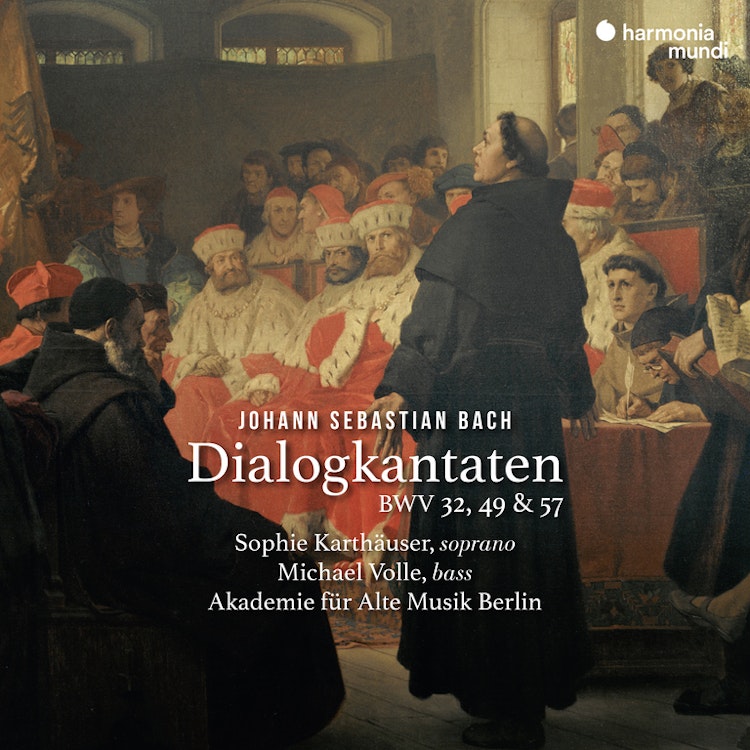
The chamber music-like format of these cantatas was inspired by their dialogical texts, which feature the 'Faithful Soul' (soprano) in an edifying discourse with 'Jesus' (bass).
Composition History
During his first four years as Kantor and Director Musices in Leipzig (1723-1750), Bach produced three annual cycles of cantatas, systematically exploring the genre and blazing new stylistic trails.
Performer Biography
Baritone Michael Volle has been voted 'opera singer of the year' twice by Opernwelt magazine (2009 and 2014) and received the German Faust Prize for music theatre.
Compositional Technique
Bach's church cantatas, from his Weimar period onwards, adopted a "mixed madrigalian type" that combined biblical texts and chorale strophes with free poetry suitable for arias and recitatives, bridging the gap with operatic music.
Composition History
The three cantatas on this recording belong to Bach's third Leipzig cycle, where he reduced the forces to a solo group of two vocal parts and a simple four-part final chorale, favoring finely elaborated arias over large choruses.
Composition History
Bach was tasked with composing "new works monthly" for the court's Lutheran liturgy during his time as Konzertmeister at the ducal court of Weimar (1708-1717).
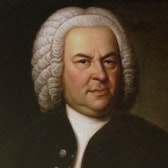
Composer Biography
At 23, Bach aimed to establish "well-regulated church music" with regular sacred cantata performances, but a devastating fire in Mühlhausen forced him to seek new employment.