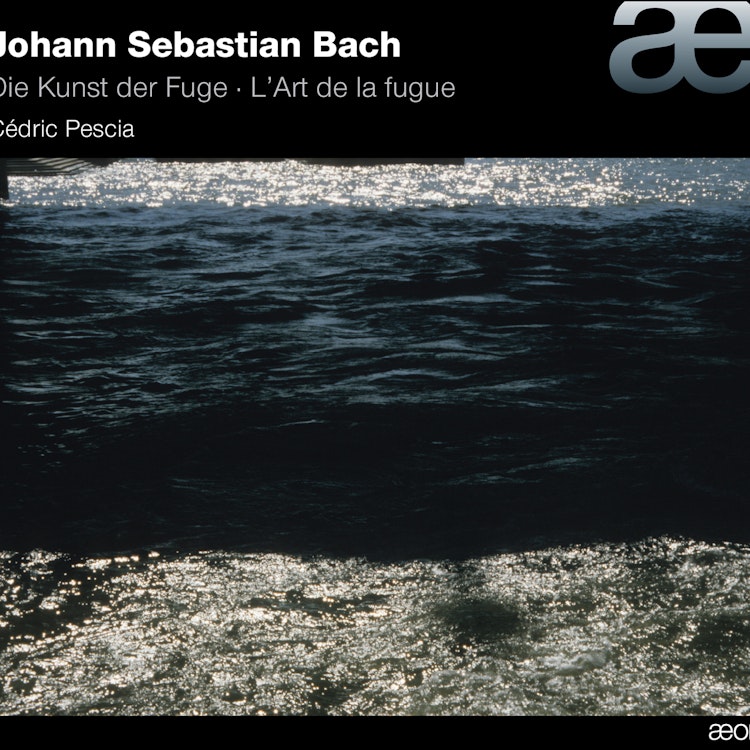
Pianist Cédric Pescia chose to tune his early 20th-century American Steinway piano in a particular way to modify interval relations and make the chromatism more eloquent, aiming for a 'singing' character.
Composition History
Contrary to popular belief, the 14th contrapunctus was not interrupted due to Bach's blindness; he composed other pieces afterward, including the Credo of the Mass in B minor.
Notable Performances
The Art of Fugue was first publicly performed in 1924 as an orchestral version by Wolfgang Graeser, one of the editors of Bach's complete works.
Composer's Artistic Vision
Bach likely intended The Art of Fugue as a final contribution to the Mizler Society of Musical Sciences, which he joined in 1747.
Compositional Technique
The entire work of The Art of Fugue is maintained in the sole key of D minor, with very few harmonic movements, but always concludes with a Picardy third in D major.
Composition History
The final fugue of The Art of Fugue was left unfinished, interrupting shortly after Bach used his own name (B-A-C-H) as a third subject.
Composition History
Bach's The Art of Fugue was published posthumously in 1751, but the edition was negligent, leading to debates about the order of pieces and instrumentation.
You might also enjoy...
Bach: Well-Tempered Clavier, Book 2 (Excerpts)
J. S. Bach: Das Wohltemperierte Clavier I BWV846-869