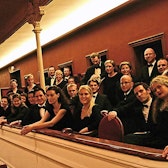
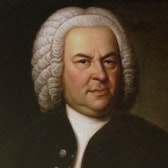
The organ, which is about the same size as the Brustwerk Bach used in Leipzig, plays a more prominent role in this recording than in others, often doubled by a harpsichord.
Composer's Artistic Vision
Bach's strict adherence to the chorale cantata principle meant that almost all works in this particular cycle were newly composed, as he could not fall back on existing material.
Compositional Technique
In this cycle, Bach based each cantata on a hymn, which begins and ends the work, with the opening movement as a large-scale chorale fantasia and the final movement as a simple harmonization.
Recording & Production
This recording seeks to establish logical tempi that Bach himself intended, based on medieval tempo theory, by maintaining a consistent pulse, often the tempo of the chorale.
Interpretation
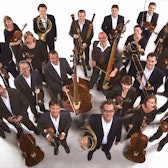
The performers on this recording use a contrabassoon in many movements, even though Bach only had access to this instrument in the late 1730s, to achieve a deep, well-grounded sound.
Composition History
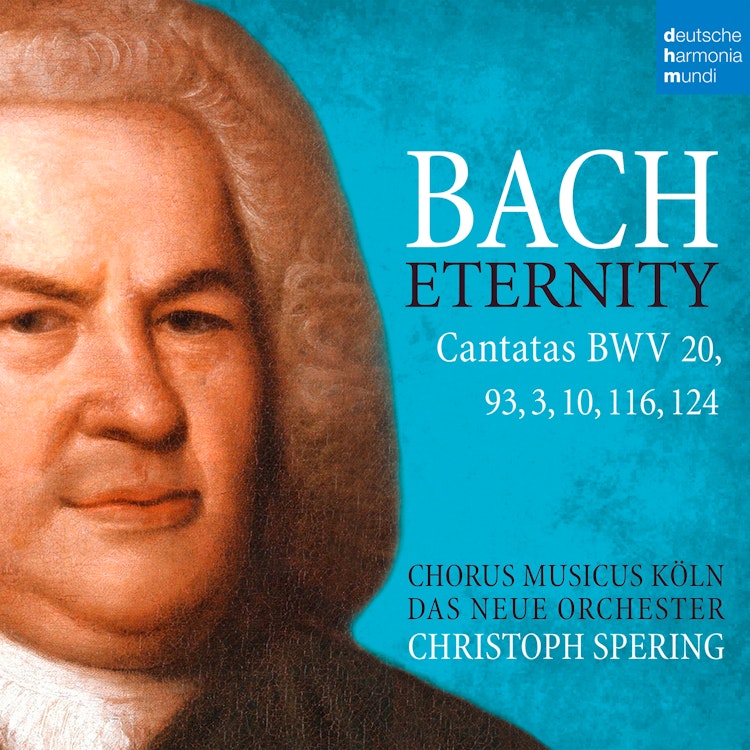
This album features cantatas from Bach's annual cycle of chorale cantatas, performed between Trinity Sunday 1724 and Easter 1725, which is considered his most comprehensive and unified cycle.
Compositional Technique
Bach combined the Central German chorale cantata form, cultivated by his predecessor at St. Thomas's, with more modern forms inspired by Italian opera in these cantatas.
You might also enjoy...
J.S.Bach - The first Cantata Year - BWV 22 "Jesus nahm zu sich die Zwölfe"
Bach: Ich hatte viel Bekümmernis, BWV 21
Bachkantate, BWV 55 - Ich armer Mensch, ich Sündenknecht
Bachkantate, BWV 147 - Herz und Mund und Tat und Leben (Live)
Bach, JS : Cantates Sacrées BWV Nos 140 & 147
Bach: Cantatas, Vol. 52
J.S. Bach: Wer sich selbst erhöhet, der soll erniedriget werden, BWV 47