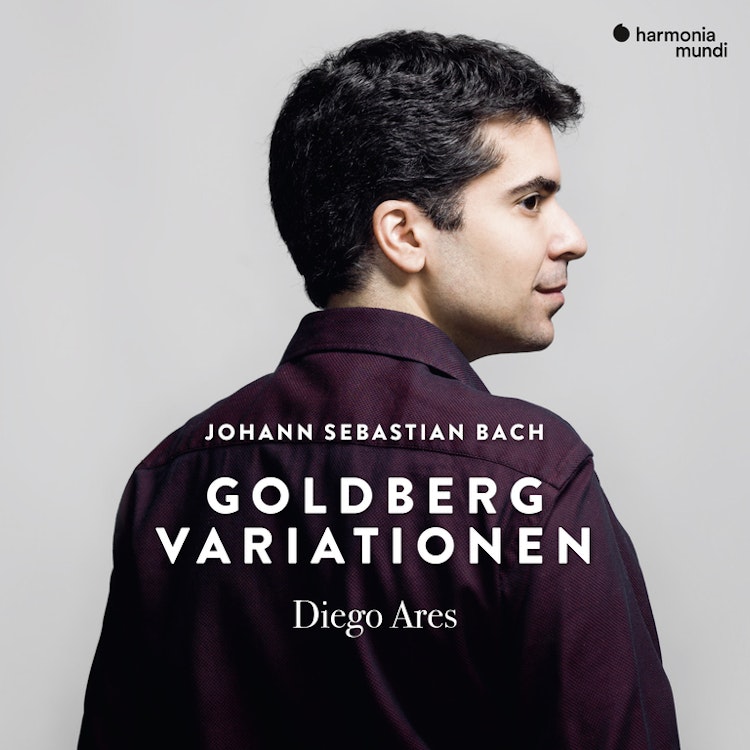
Diego Ares, the performer, begins his day by playing the Goldberg Variations, considering them a form of prayer, meditation, and exercise.
Compositional Technique
Bach's Goldberg Variations include a Quodlibet, an old musical form that combines different folk tunes, instead of a final canon at the tenth, which would have completed a logical architectural progression.
Interpretation
The performer, Diego Ares, adds an Adagio in G major (a transcription of a violin work) as a prelude to the Goldberg Variations, as the work itself lacks one.
Compositional Technique
The Goldberg Variations begin with a 32-bar Aria, followed by 30 variations, concluding with an 'Aria da Capo è fine' to make a total of 32 pieces, mirroring the initial Aria's length.
Instruments
This recording features Diego Ares performing on a harpsichord made by Joel Katzman in 2002, modeled after a Pascal Taskin instrument from 1769.
Composer Biography
Forkel, Bach's first biographer, noted that the Bach family enjoyed improvising quodlibets, with listeners often laughing upon recognizing the hidden folk songs.
Composer's Artistic Vision
The choice of the Quodlibet in the Goldberg Variations, rather than a canon, is interpreted by some as a sign of humility, as Bach reserved glory for God.
You might also enjoy...
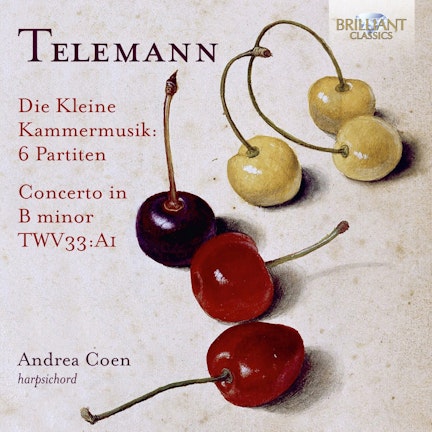
Telemann: Die Kleine Kammermusik, 6 Partiten, Concerto in B Minor
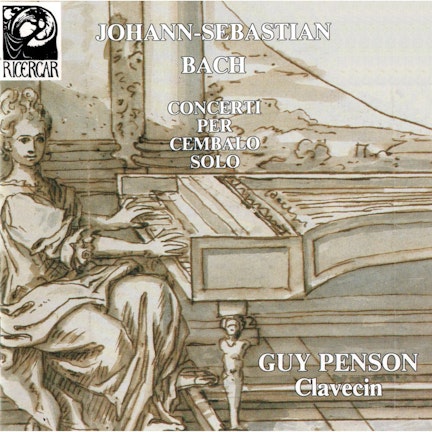
Bach: Concerti per cembalo solo
Bach, JS : English & French Suites Nos 1 & 2
Ferrini: Opere per clavicembalo
J.C.F. Fischer: Harpsichord Suites
Bach, J.S.: Clavier-Buchlein for Anna Magdalena Bach 1722
Ferrini: Opere per clavicembalo
Georg Friedrich Händel: The complete Works for Harpsichord Vol. 4
Bach: English Suites, BWV 806-811
J. S. Bach: English Suites
Bach: "Italian" Concerto, "French" Overture & Other Works for Harpsichord
Georg Friedrich Händel: The complete Works for Harpsichord Vol. 2