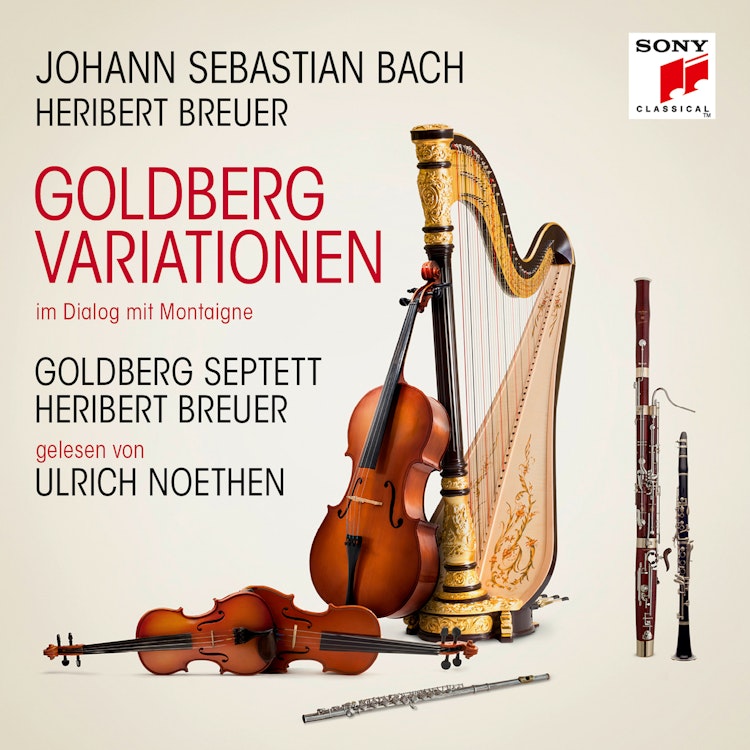
Bach: Goldberg-Variationen im Dialog mit Montaigne
8/24/2018, 42 Tracks, 1:22:59
Featuring
Ulrich Noethen
Goldberg-Septett
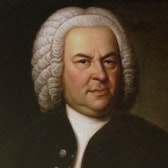
Johann Sebastian Bach
Did you know?
1/7
Composer's Artistic Vision
Heribert Breuer's arrangement aims for transparency, clarity, and color, and includes newly composed voices in some sections to enhance Bach's goal of 'Gemüths-Ergetzung' (delight of the soul).
Composition History
Johann Sebastian Bach's Goldberg Variations were published in the autumn of 1741, during the last decade of his life.
Compositional Technique
Bach structured the Goldberg Variations into 10 subgroups of three movements, each concluding with a strict canon, which progressively increase in the interval of their voice entries.
Album & Artwork
This album intersperses the musical variations with spoken texts by Michel de Montaigne, a 16th-century French philosopher, to provide a literary counterpoint to Bach's music.
Composition History
According to Bach's biographer Forkel, the Goldberg Variations were commissioned by Count Keyserling for his sleepless nights, with Bach's student Johann T. Goldberg performing them.
Composer Biography
Heribert Breuer is known as an organist, founder and conductor of the Berlin Bach Academy, and for his numerous arrangements of classical works, including Bach's Art of Fugue.
Interpretation
Heribert Breuer's arrangement of the Goldberg Variations uses a septet of two trios (string and wind) with a harp at the center, a deliberate choice for aesthetic reasons rather than historical performance practice.