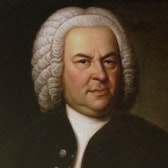
Johann Sebastian Bach's Goldberg Variations were published in autumn 1741 as the fourth and final part of his Clavier-Übung (Keyboard practice) series.
Recording & Production
This recording is a coproduction with Deutschlandfunk Kultur and was made on October 23-24, 2016, at the Jesus-Christus-Kirche in Berlin-Dahlem.
Compositional Technique
Bach's Goldberg Variations are structured into ten three-movement subgroups, each concluding with a strict canon where the interval between voices continuously expands from a unison to a ninth.
Performer Biography
Heribert Breuer, the arranger, is known for his musical versatility as an organist, founder-conductor of the Berlin Bach Academy, and for his compositional paraphrases.
Composer's Artistic Vision
Heribert Breuer's primary goal for this arrangement was to achieve lucidity, translucence, and timbral variety, similar to his previous arrangement of Bach's The Art of Fugue.
Composition History
According to Bach's biographer Nikolaus Forkel, the Goldberg Variations were composed at the request of Count Keyserling to provide music for his sleepless nights.
Interpretation
Heribert Breuer, the arranger of this version, chose a septet scoring for two trios (strings vs. winds) with a harp, deliberately violating 'historically informed performance practice' for aesthetic reasons.
You might also enjoy...
Goldberg Variations (Arranged for Small Orchestra by Józef Koffler)
Die Jahreszeiten
Vitali: Varie Sonate alla Francese & all'Itagliana à sei Stromenti, Op. 11
Vitali: 12 Sonatas, Op. 5
Samuel Scheidt: Ludi Musici
Marini: Affetti Musicali
Ich steh an deiner Krippen hier, BWV 469 (Arr. for Violin, String Quintet & Piano by Jan-Peter Klöpfel)