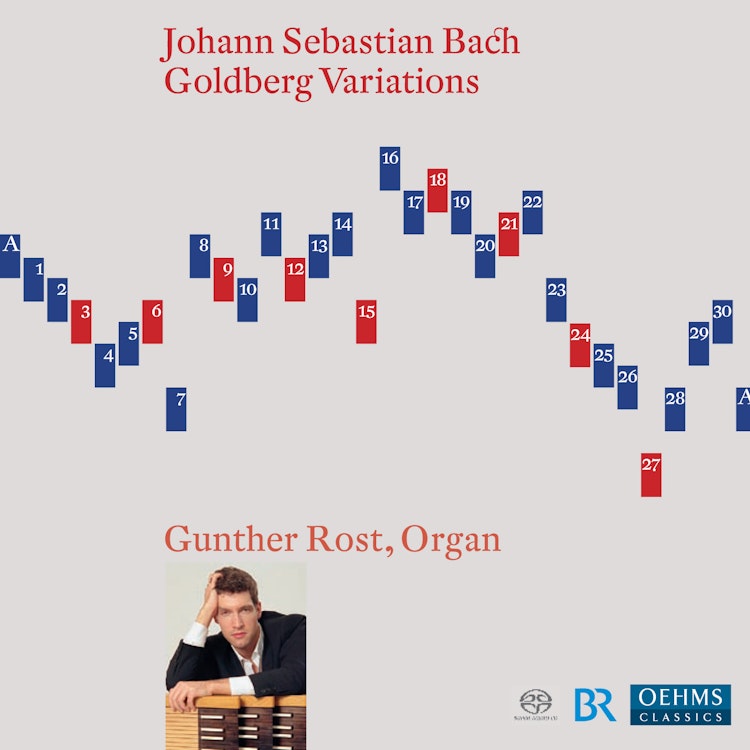
Johann Sebastian Bach published the Goldberg Variations in autumn 1741 as another part of his Klavierübung series.
Performer Biography
Gunther Rost, the organist on this album, has won over a dozen international prizes for his organ playing, including at the Bach Competition in Leipzig.
Composer's Artistic Vision
The Goldberg Variations may contain secret messages, as suggested by complex number symbolism in the title page text, such as the number 14 appearing frequently in relation to Bach's name.
Compositional Technique
The work is structured with nine canons and a concluding Quodlibet, totaling 10 movements, with the number 10 closely associated with the Ten Commandments.
Interpretation
This recording attempts to demonstrate that the organ, despite its association with liturgical music, is capable of expressing all types of musical content, including the Goldberg Variations.
Compositional Technique
Bach's Goldberg Variations exhibit numerous principles of ordering, such as the 32 movements correlating with the 32 bars of the Aria, and the two parts of the Aria mirroring the two 16-movement halves of the work.
Composer's Artistic Vision
The 'aria' in the Goldberg Variations is interpreted as an allegory for God, representing 'the Beginning and the End' from which everything springs and returns.
You might also enjoy...
Fantasia in F Minor for Mechanical Organ, K. 608
J.S. Bach: Organ Works, Vol. 3
Bach, J.S.: Organ Music, Vol. 2
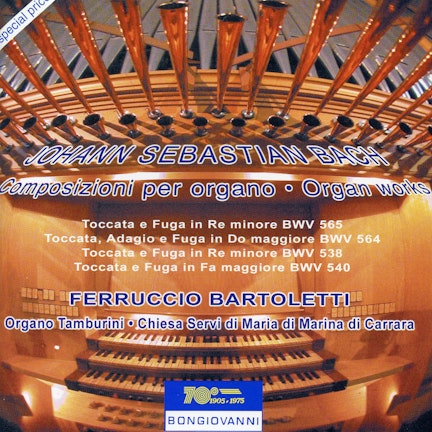
Bach, JS : Organ Works
Bach, J.S: Complete Toccatas and Fugues (The)
Buxtehude: Organ Music, Vol. 2
Buxtehude: Organ Works
Bach, J.S.: Organ Works
J.S. Bach: Toccata and Fugue
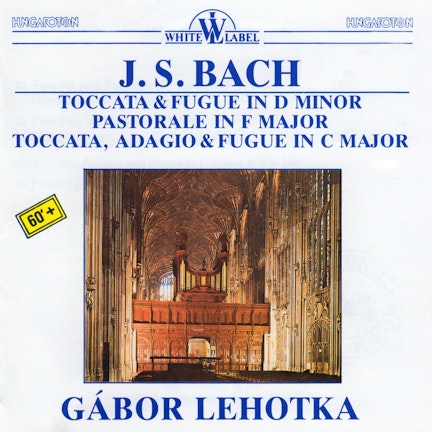
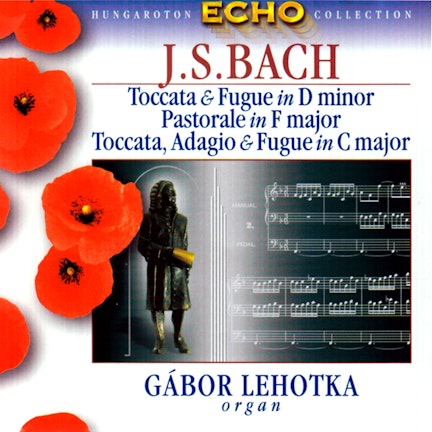
Bach, J.S.: Toccata & Fugue in D minor, etc.
Bach: Toccate e fughe
Bach: Organ Works
Bach, J.S: Toccata Und Fugue in D Minor / Pastorale in F Major / Passacaglia and Fugue in C Minor