Given Bach's interest in numerology, the number '30' (the total number of Inventions and Sinfonias) can be interpreted as the years Jesus spent learning the basics of human existence.
Historical Context
The term 'inventio' used by Bach for these pieces originated in the rhetoric of the famous Roman orator Marcus T. Cicero, whose writings were widely studied in Germany during Bach's era.
Performer Biography
Masaaki Suzuki, the harpsichordist on this recording, is also an acclaimed conductor and has an enviable reputation for his interpretations of Bach's cantatas.
Composition History
The Inventions and Sinfonias evolved from an earlier collection called the Clavierbüchlein for Wilhelm Friedemann Bach, which Bach started for his eldest son in 1720.
Compositional Technique
Bach revised the pieces multiple times, even modifying the shape of subjects and extending phrases, such as in Inventions Nos. 7 and 13, and adding a triplet motif to Invention No. 1.
Composer's Artistic Vision
Bach's original description of the Inventions and Sinfonias highlights their purpose: to teach keyboard amateurs to play cleanly in two and three voices, develop good musical ideas, and achieve a 'cantabile' manner of playing.
Composition History
J.S. Bach's Inventions and Sinfonias (BWV 772-801) were written as short pieces for his teaching activities and became popular even in his own time.
You might also enjoy...
J.S. Bach - Partita No. 1 in B-flat Major, Partita No. 4 in D Major
Händel: Suiten für Cembalo
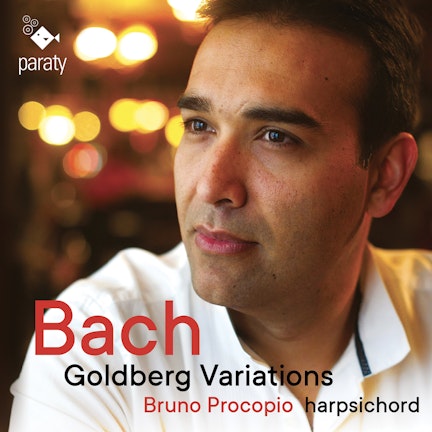
Bach: Goldberg Variations
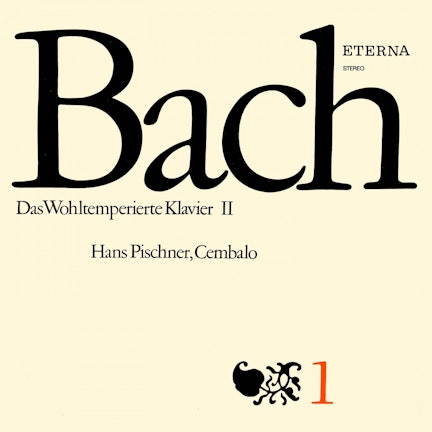
Bach: Das wohltemperierte Klavier II
Handel: Harpsichord Suites Nos. 1- 5
Bach: Goldberg Variations
The Joannes Daniel Dulcken Harpsichord: J.S. Bach – Goldberg Variations