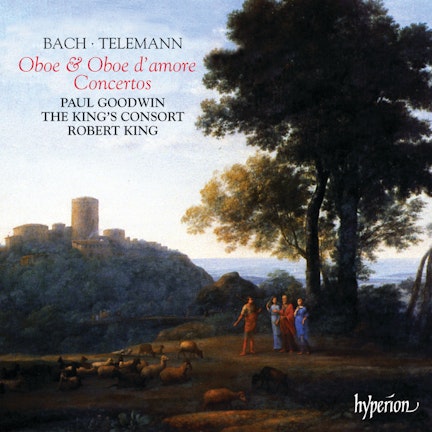
The oboe d'amore likely emerged in the 18th century as a convenient way to play in the key of A (3 sharps), a minor third below the oboe's pitch.
Recording & Production
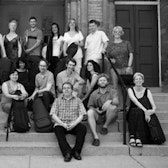
The Toronto Chamber Orchestra, which performs on this album, records frequently in Toronto's historic St. Anne's Church, where this recording was made.
Composer Biography
Telemann founded the University Collegium Musicum in Leipzig, a group that J.S. Bach would later direct.
Performer Biography
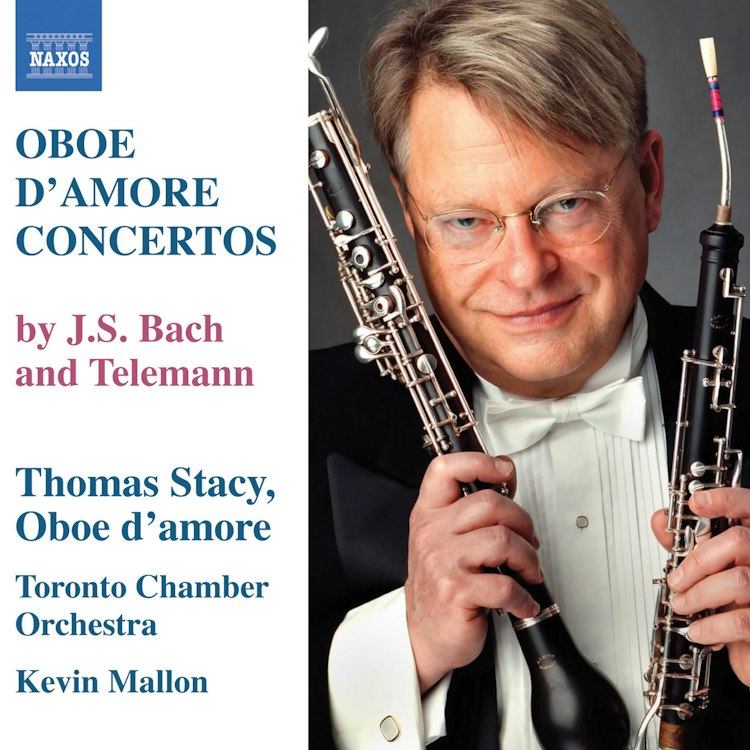
Thomas Stacy, the oboe d'amore soloist on this album, is the most recorded English hornist in the world and has performed as a soloist with the New York Philharmonic over 65 times.
Instruments
The oboe d'amore is the alto or mezzo-soprano member of the oboe family, characterized by its darker, less nasal tone compared to the standard oboe.
Compositional Technique
J.S. Bach often recycled his musical material, as seen in the Concerto in D major, BWV 1053, which reworks movements from two of his cantatas and later became a harpsichord concerto.
Composer Biography
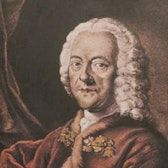
Georg Philipp Telemann, a contemporary and friend of J.S. Bach, was considered a rival in reputation and was the Leipzig authorities' preferred choice for Cantor at the St. Thomas Choir School before Bach was appointed.
You might also enjoy...
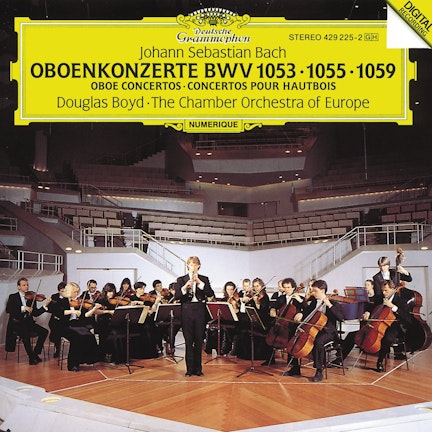
Bach, J.S.: Oboe Concertos BWV 1053, 1059 & 1055
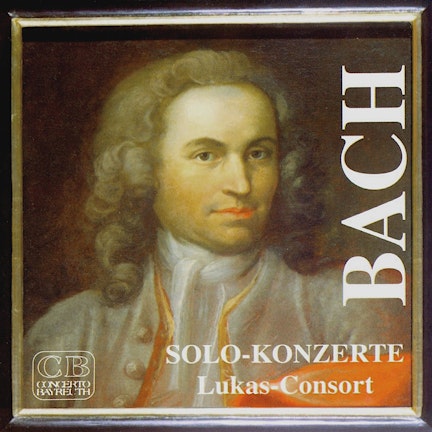
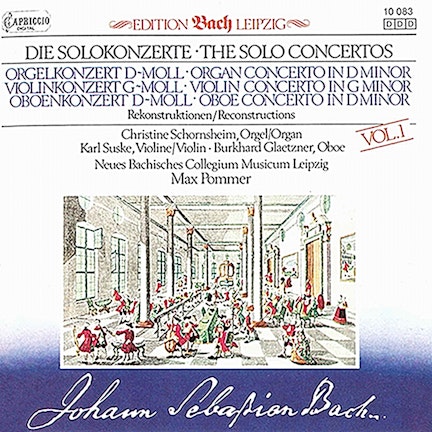
Johann Sebastian Bach: Solo-Konzerte
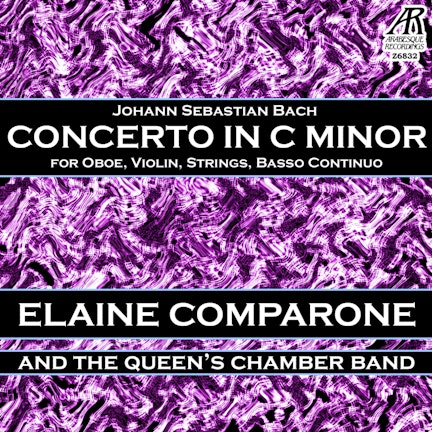
Bach: Concerto in C Minor - for Oboe, Violin, Strings & Basso Continuo
Telemann: Allegro – Adagio (from: Concerto in D major TWV 52:D3)
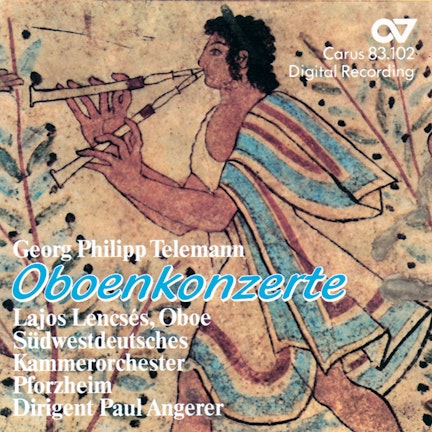
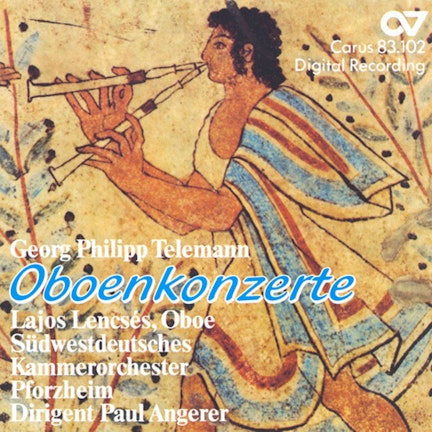
Telemann: Oboenkonzerte
Fasch Concerto in G Major: III. Allegro
Telemann, G.: Oboe Concertos in F Minor / A Major / E Minor / G Major
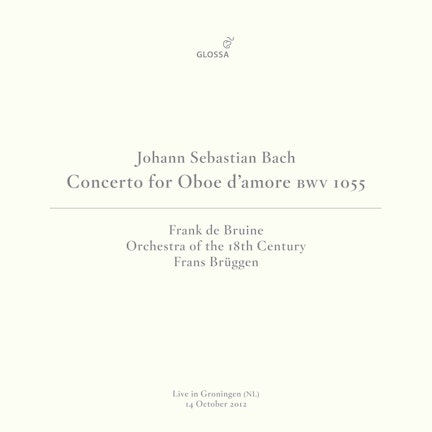
J.S. Bach: Oboe d'amore Concerto in A Major, BWV 1055R (Live in Groningen, 10/14/2012)
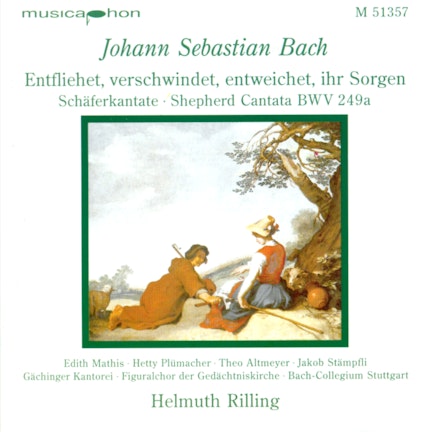
Bach, J.S.: Entfliehet, Verschwindet, Entweichet, Ihr Sorgen / Concerto for Oboe and Violin in D Minor
Concerto for Oboe d'amore in A Major/III. Allegro ma non tanto (after BWV 1055R)