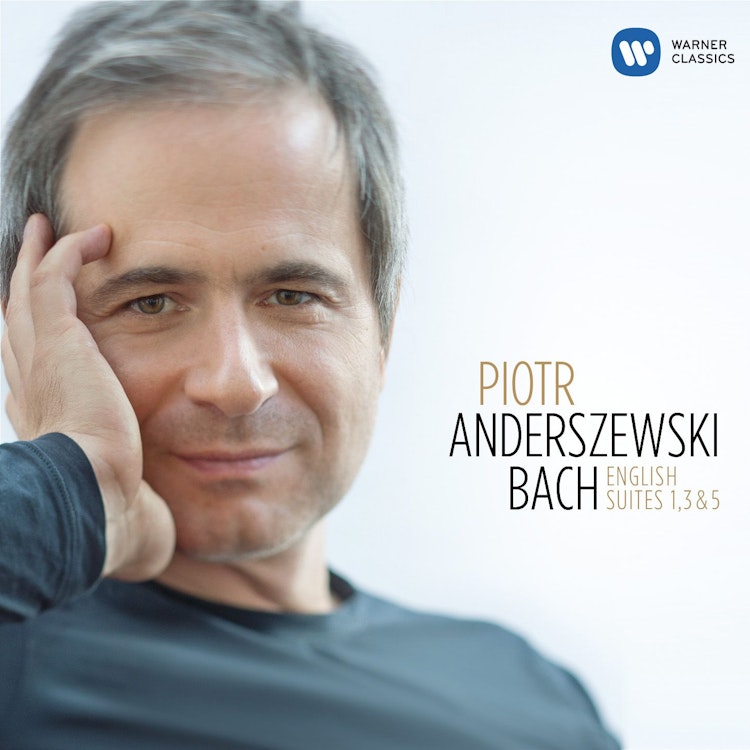
Piotr Anderszewski, the performer on this album, chose to use the ordering of the courantes from an early version of Suite No. 1 (BWV 806a) to make the dramatic evolution of the piece more coherent.
Critical Reception
Since the 19th-century Bach revival, the English Suites have gained a steadily growing reputation among concert performers, with early recordings by harpsichordist Wanda Landowska and pianist Walter Gieseking enhancing their public standing.
Cultural Impact
Despite remaining unpublished as a set until 1841, the English Suites were widely used as teaching material by Bach, not only for playing but also for composition.
Composition History
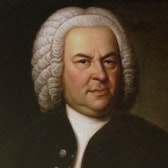
The name "English Suites" was not given by Bach himself, but rather appeared years after his death, based on a claim by his first biographer, Johann Nikolaus Forkel, that they were made for an "Englishman of rank."
Compositional Technique
Each English Suite follows a German formal plan, with an opening prelude followed by binary-form dance movements, and includes pairs of 'galanterien' (extra dance movements in the French style) between the sarabande and gigue.
Compositional Technique
The English Suites uniquely combine galant melodies in the refined French style, virtuosic Italianate concertante elements in the preludes, and contrapuntal textures in the Germanic mould.
Composition History
The English Suites are the earliest of Bach's three keyboard suite collections, likely composed around 1715 in Weimar and compiled by 1725 in Leipzig.
You might also enjoy...
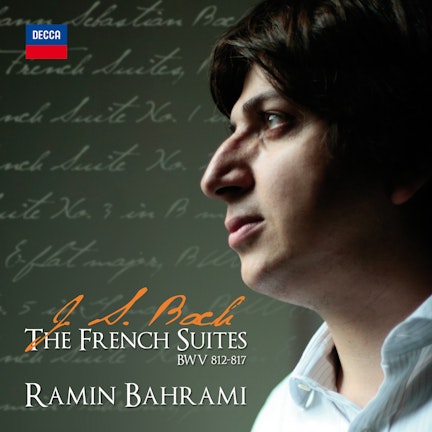
J. S. Bach: The French Suites
The English Suites; Suites Nos.1 - 6
J.S. BACH: The English Suites
Bach: The Complete English Suites
Bach, J.S.: French Suites Nos. 1-6/Italian Concerto etc.
Bach: Suites Francesi
Bach, J.S.: English Suites Nos. 1-3, Bwv 806-808
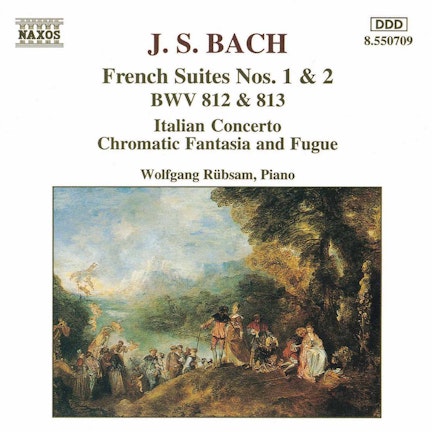
J.S. Bach: French Suites Nos. 1-2 - Italian Concerto - Chromatic Fantasia and Fugue
BACH - Inside Polyphony
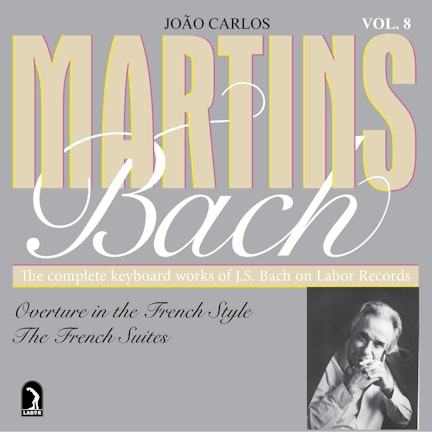
Bach, J.S.: French Suites Nos. 1-6 / Overture (Partita) in the French Style