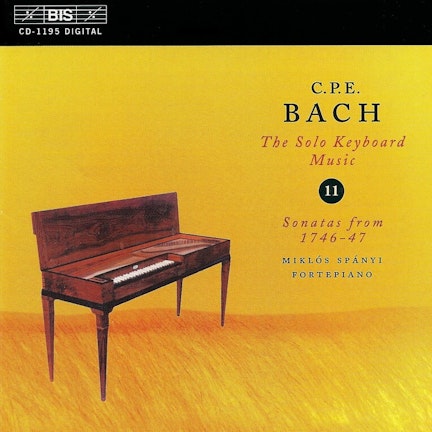
Johann Christian Bach's music blended Italian, German, French, and British elements due to his frequent European travels, which helped shape future musical styles.
Cultural Impact
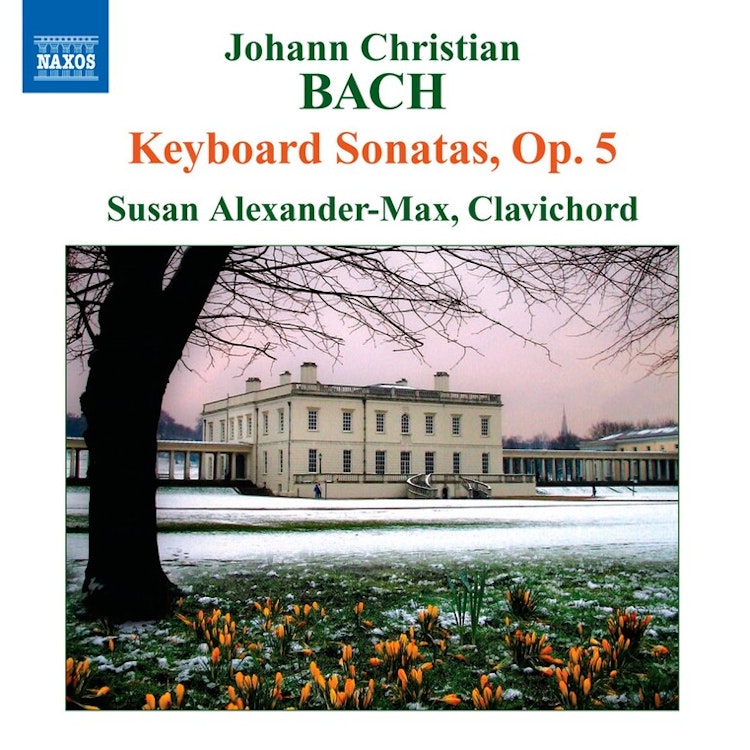
The young Mozart was so impressed by Johann Christian Bach's Op. 5 Sonatas that he adapted Nos. 2, 3, and 4 as piano concertos (K.107).
Compositional Technique
Some of the Op. 5 Sonatas contain dynamic markings like crescendo, forte, and piano, which would have been difficult or impossible to perform precisely on a harpsichord but are natural on a piano or clavichord.
Composer Biography
Johann Christian Bach, the composer of these sonatas, was the tenth child of J.S. Bach's second marriage and the only one of his immediate family to break from the German Lutheran tradition.
Composer Biography
Johann Christian Bach achieved greater international renown in his lifetime than any other member of the Bach family, including his famous father, J.S. Bach.
Instruments
The fortepiano, a new instrument developed by German craftsmen during the Seven Years War, appealed to Johann Christian Bach for its expressive range.
Composition History
Johann Christian Bach's Op. 5 Sonatas were published in 1766 as 'Six Sonatas for the Harpsichord or the Fortepiano,' indicating the emerging popularity of the fortepiano.
You might also enjoy...
C.P.E. Bach: 6 Collections of Sonatas, Free Fantasias & Rondos for Connoisseurs & Amateurs
J. C. F. Bach: Sonata II in A Major, BR A 14
Koželuch: Complete Keyboard Sonatas, Vol. 5
Koželuch: Complete Keyboard Sonatas, Vol. 2
J.C. Bach: Piano Sonatas, Op. 17
Koželuch: Complete Keyboard Sonatas, Vol. 12
The Portuguese Scarlatti: Keyboard Sonatas By Domenico Scarlatti
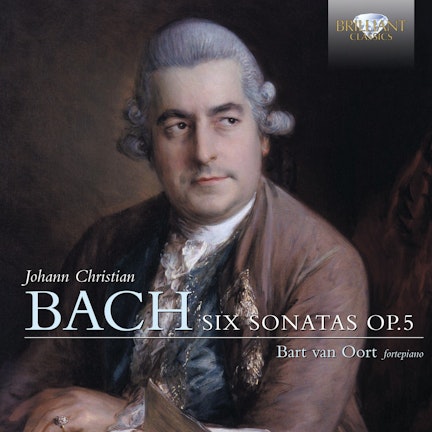
J.C. Bach: Six Sonatas, Op. 5
Domenico Scarlatti: Piano Sonatas, Vol. 2
CPE Bach: für Kenner und Liebhaber, Sonatas, Rondos & Fantasias