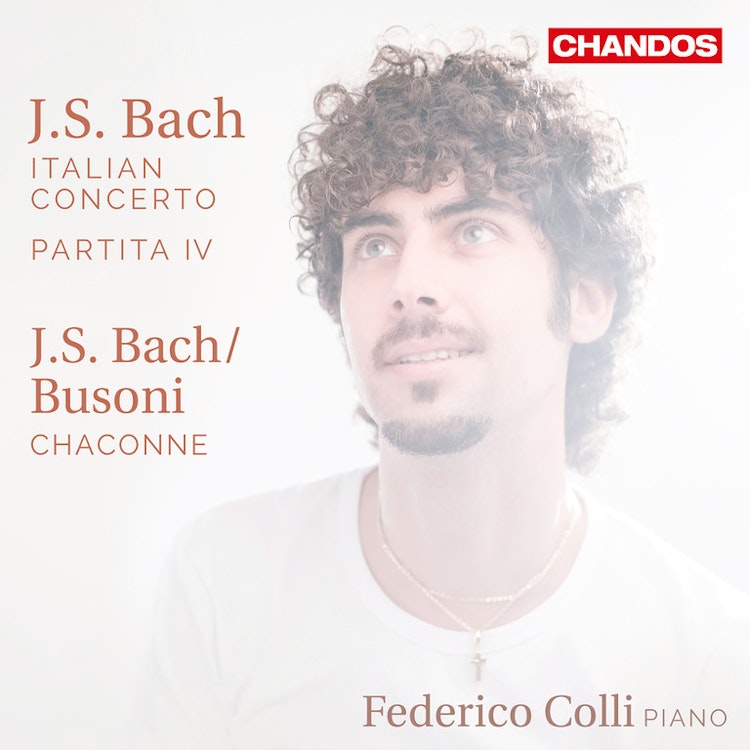
The performer, Federico Colli, views the music on this album, particularly the Chaconne, as having a "relationship with the transcendent," seeing it as a contemplative reality and a sign of deeper mystery.
Composition History
J.S. Bach's Clavier-Übung series, which includes the Partita IV and Italian Concerto on this album, was a new artistic project he undertook after mastering his initial hectic years in Leipzig composing cantatas.
Critical Reception
Even J.S. Bach's harshest critic, his former student Johann Adolph Scheibe, praised the Italian Concerto enthusiastically as a "perfect specimen of an excellently crafted unaccompanied concerto."
Compositional Technique
In his Clavier-Übung II, J.S. Bach aimed to present the predominant national styles of his time (Italian and French) in characteristic compositions, adapting orchestral genres for the keyboard.
Composer Biography
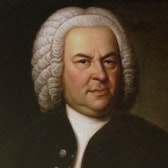
J.S. Bach preferred the title "Director Musices" (city music director) over "Thomaskantor" (cantor at St. Thomas School), as the latter carried the connotation of an artistically inferior schoolteacher.
Composer's Artistic Vision
J.S. Bach's contemporary, Johann Abraham Birnbaum, described Bach's compositional technique as a "wonderful intertwining" of voices that creates beauty through its complexity and careful contrapuntal elaboration.
Compositional Technique
J.S. Bach's Chaconne for solo violin is considered an unsurpassed peak of his ambition to realize the full harmonic and contrapuntal scope of his musical language on a melody instrument with limited polyphonic capabilities.
You might also enjoy...
WAVES: Music by Rameau, Ravel, Alkan
The Handel Project: Handel-Suites & Brahms-Variations
Bach: The French Suites, BWV 812-817
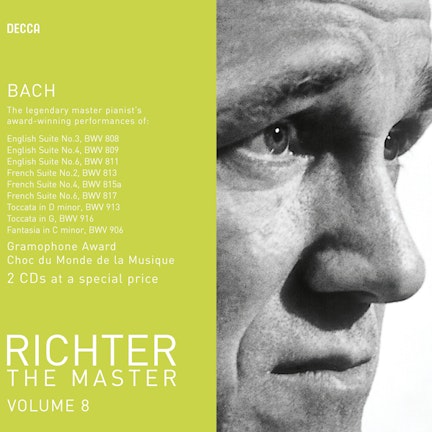
Richter The Master - Bach
Bach: French Suites, BWV 812-817
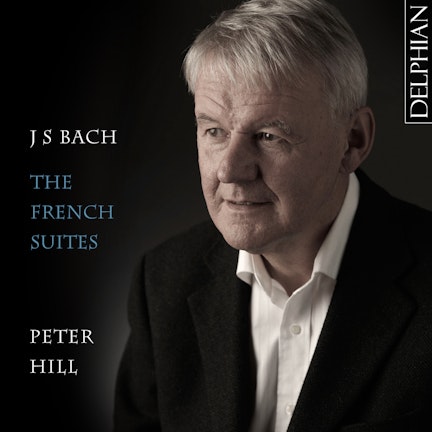
J. S. Bach: The French Suites
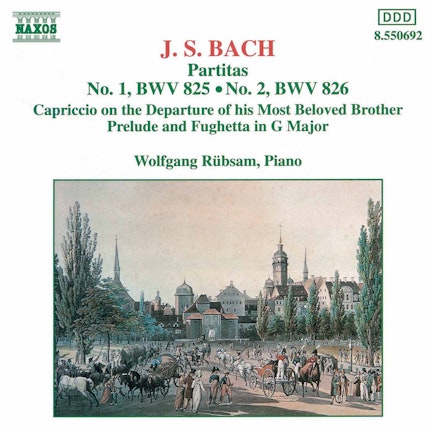
Bach: Partitas, BWV 825-826 - Capriccio on the Departure of his Most Beloved Brother - Prelude and Fughetta in G major, BWV 902
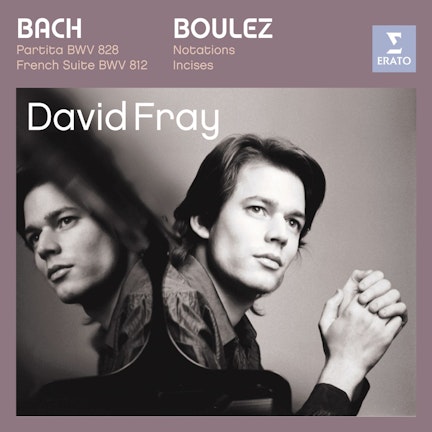
Bach: Partita in D major, French Suite in D minor / Boulez: Douze Notations pour piano, Incises
J'écoute Bach et Haendel avec ma maman
Bach: French Suites
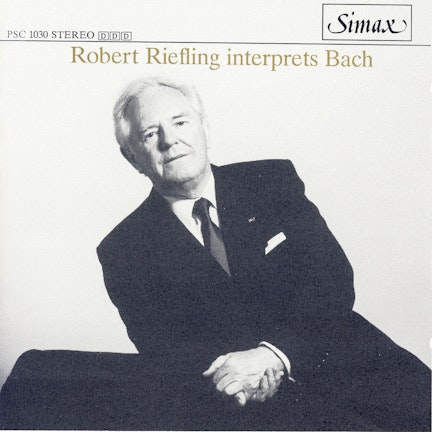
Robert Riefling Interprets Bach
Bach to Black: Suites for Piano, Vol. III
Rameau: Pièces de clavecin (Complete Keyboard Music)