Bach: Magnificat in D Major & Unser Mund set voll Lachens
11/1/2010, 22 Tracks, 1:04:27
Featuring
Jos van Veldhoven
De Nederlandse Bachvereniging
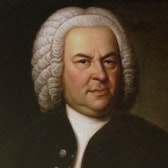
Johann Sebastian Bach
Dirk Janszoon Sweelinck
Jan Baptist Verrijt
Johann Hermann Schein
Johann Michael Bach
Did you know?
1/7
Historical Context
In Leipzig, Christmas Day Vespers began at 1:15 PM with the bells of the Thomaskirche and lasted until about 4 PM, with music playing a prominent role.
Composition History
According to Bach scholar Christoph Wolff, Bach's first version of the Magnificat (BWV 243a) was his 'first really large-scale and complex piece of church music,' serving as his 'visiting card' to his new employer in Leipzig.
Performer Biography
The Netherlands Bach Society, founded in 1921, is the oldest early music ensemble in the Netherlands and possibly in the world.
Compositional Technique
In the cantata Unser Mund sei voll Lachens, Bach borrowed the music for the striking opening chorus from his Orchestral Suite in D major (BWV 1069), adding parts for choir and four soloists.
Composition History
Bach created a second version of the Magnificat (BWV 243) around 1733, now in D major and without the Christmas-specific interpolations, which allowed it to be performed on other important feast days.
Compositional Technique
Bach's first version of the Magnificat (BWV 243a) included four 'Laudes' or 'Einlagen' (interludes) – German and Latin Christmas carols inserted between the standard text's verses, a tradition in some parts of Germany since the 16th century.
Composition History
Bach wrote the cantata Unser Mund sei voll Lachens (BWV 110) for Christmas Day 1725 and the first version of the Magnificat (BWV 243a) for Christmas Day 1723, shortly after becoming cantor of the Thomaskirche in Leipzig.
You might also enjoy...
Complete Sacred Works, Vol. 2
Musik der Hansestädte, Vol.2: Musik aus dem alten Danzig
DHM Splendeurs: Vitry: Motets Et Chansons
DHM Splendeurs: Dante & Les Troubadours
DHM Splendeurs: Dante & Les Troubadours
Dante & Troubadours
¡Ay Amor! Spanish 17th Century Songs & Theatre Music
Bousset: Airs sérieux
Il Canto della Sirena: Cantate Napoletane dell'Eta Barocca
Joculatores Upsalienses: Woods, Women and Wine
Lambert & Lully: Airs de Cour
Bernhard: Geistlicher Harmonien & Other Sacred Concertos
Arias for Silvio Garghetti
The Golden Dream - 17th Century Music from the Low Countries