Bach: Magnificat in E-Flat Major & Missa in F Major
10/6/2017, 27 Tracks, 1:13:54
Featuring
Sir John Eliot Gardiner
Gianluca Buratto
Hannah Morrison
Reginald L. Mobley
Angela Hicks
Jake Muffett
Hugo Hymas
Eleanor Minney
Charlotte Ashley
English Baroque Soloists
Monteverdi Choir
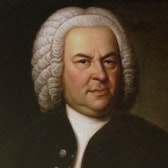
Johann Sebastian Bach
Did you know?
1/7
Composition History
The Missa brevis in F, BWV 233, is one of four 'Lutheran' Masses Bach composed in the late 1730s, which are considered unjustly neglected.
Composition History
Bach's Magnificat in E flat major, BWV 243a, was the crowning glory of his first Christmas music in Leipzig in 1723.
Compositional Technique
The Missa brevis in F, BWV 233, largely consists of movements that are 'parodies' or reworkings of existing cantatas by Bach, transplanted with new Latin texts.
Historical Context
During Bach's first Christmas in Leipzig in 1723, he set his choir, the Thomanerchor, nine new works to master, including six cantatas, to be performed over sixteen days in three churches.
Composer's Artistic Vision
Bach often re-used and revised his existing works, not rejecting original ideas but revelling in uncovering fresh permutations, as seen in his 'Lutheran' Masses.
Compositional Technique
The E flat Magnificat, BWV 243a, is the only one of Bach's church compositions to call for trumpets in E flat, which were more demanding and perilous than the usual D and C models.
Historical Context
Bach's E flat Magnificat, BWV 243a, was his first major work to a Latin text, scored for full orchestra and five vocal parts, demanding virtuosity from all performers.
You might also enjoy...
Bach, J.S.: Sacred Masterpieces
Bach: Die großen Chorwerke
Bach
Bach
Bach
Bach: Magnificat In D Major, BWV 243 & Wachet Auf, Ruft Uns Die Stimme, BWV 140