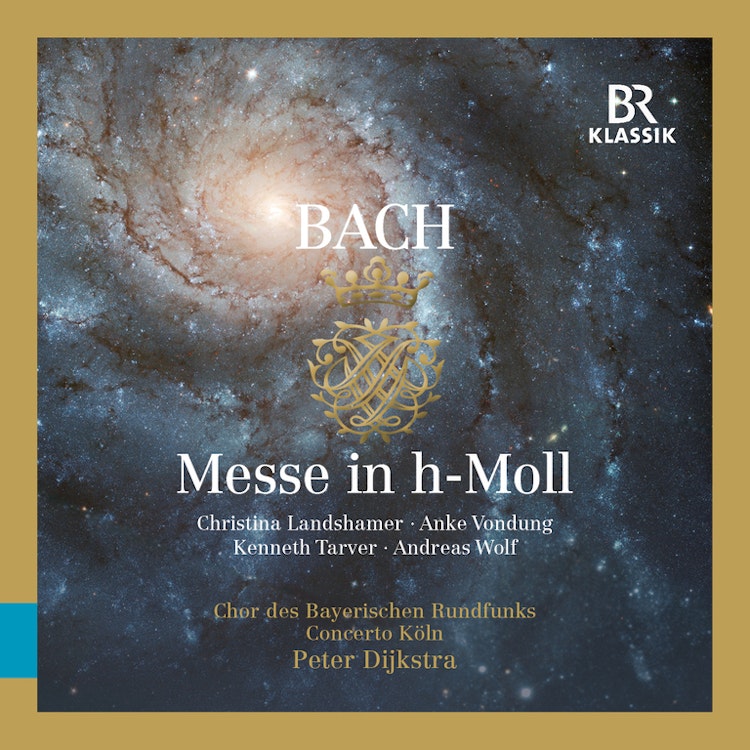
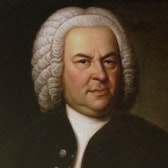
Bach likely compiled his best works in the field of mass composition, supplementing them with new or 'parody' movements, to preserve the essence of his vocal and instrumental art for future generations.
Compositional Technique
Bach's Mass in B minor demonstrates his 'Wißenschafft [...] in Musique' through its variety, including mighty choirs, delicate chamber music, complex fugues, lyrical arias, and expressive chromaticism.
Compositional Technique
The 'Crucifixus' movement in the Mass in B minor uses suspenseful chromaticism, insistent repeated notes, and sharp dissonances to convey the martyrdom of Christ.
Compositional Technique
Bach used the 'parody method' to reuse existing compositions in new contexts for parts of the Mass, such as the 'Osanna, Benedictus, Agnus Dei et Dona nobis pacem' section.
Performer Biography
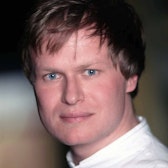
Peter Dijkstra, the conductor, was the Artistic Director of the Chor des Bayerischen Rundfunks from 2005 to 2016 and has also led the Swedish Radio Chorus and Nederlands Kamerkoor.
Composition History
In 1733, Bach presented the first part of the Mass (Kyrie and Gloria) to Frederick Augustus II of Saxony, who was also King of Poland, to recommend himself for a title at the Dresden Court Orchestra.
Critical Reception
Nearly 70 years after Bach's death, the Swiss publisher Hans Georg Nägeli advertised the Mass in B minor as 'the Greatest Musical Work of All Times and All People' to attract subscribers for its publication.
You might also enjoy...
Bach: Mass in B Minor, BWV 232
Bach: Mass in B minor
Bach: Mass in B minor
Handel: Chandos Anthems - I Will Magnify Thee; In the Lord Put I My Trust