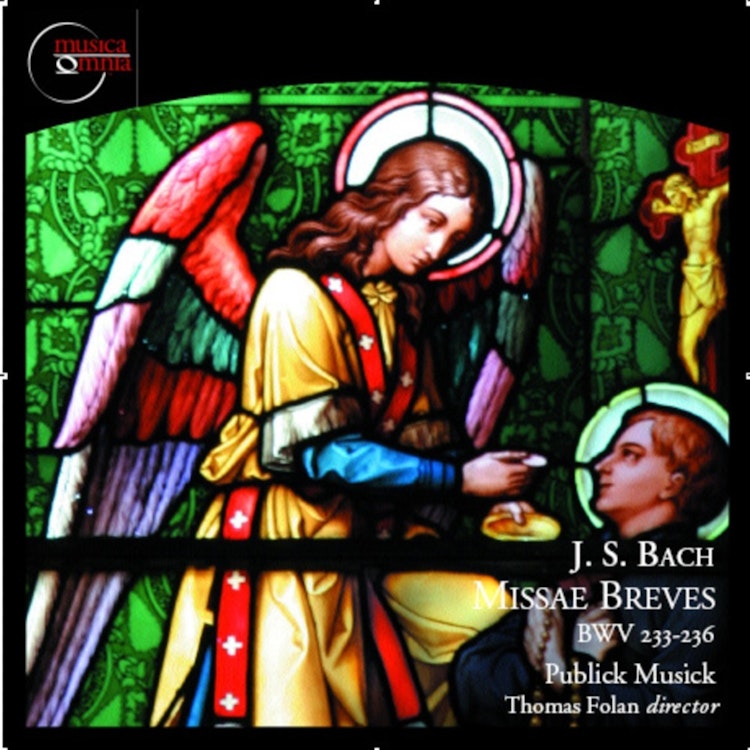
J.S. Bach's Missæ Breves (Short Masses) set only the Kyrie and Gloria texts, omitting the Credo, to suit the German Protestant service.
Composer's Artistic Vision
The four Missæ Breves (BWV 233-236) showcase Bach's ability to compile his music into orderly collections and represent a compendium of various cosmopolitan styles available in the 1730s.
Interpretation
Publick Musick, the orchestra and choir on this recording, is dedicated to performing Baroque masterworks with attention to performance practice and on period instruments.
Composition History
The five Missæ Breves appear to date from the early 1730s, a period when Bach was focused on preserving his works in more permanent forms.
Critical Reception
Earlier Bach biographers like Philipp Spitta and Albert Schweitzer were dismissive of these Missæ Breves, but modern scholarship recognizes them as prime examples of Bach's polished and inventive work.
Performer Biography
Thomas Folan, the director of Publick Musick, is a specialist in Baroque music, particularly the large-scale choral works of J.S. Bach.
Compositional Technique
Bach frequently used 'parody' technique, reusing existing music and adapting it to new texts, as seen in these Missæ Breves and the Christmas Oratorio.
You might also enjoy...
Bach: Mass in B Minor, BWV 232
Bach: Mass in B minor
Bach: Mass in B minor
Handel: Chandos Anthems - I Will Magnify Thee; In the Lord Put I My Trust