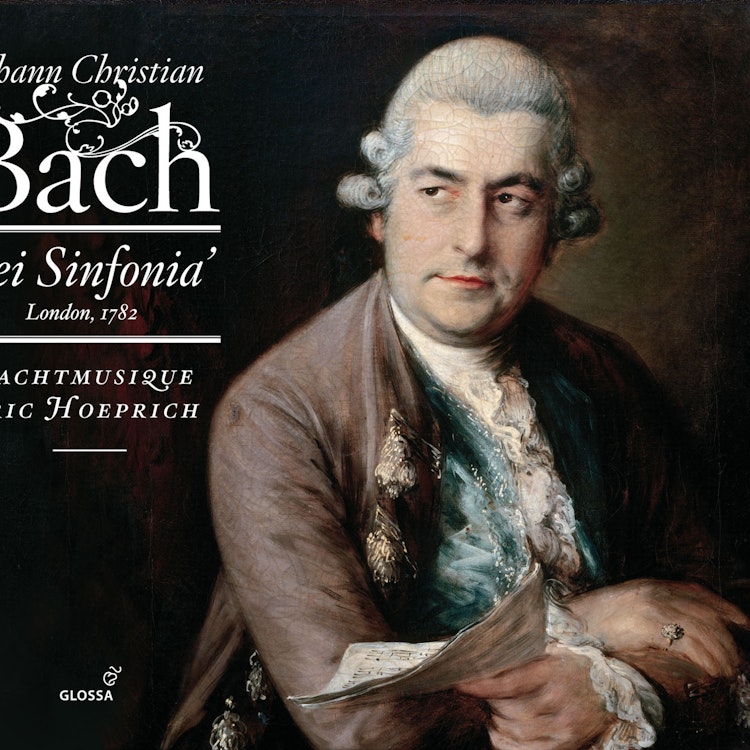
Johann Christian Bach's Sei Sinfonia for wind sextet were published posthumously in London in 1782.
Compositional Technique
Bach borrowed material from other composers, such as Boccherini and Gluck, for these works, following an 18th-century tradition of 'acceptable' plagiarism.
Composition History
Johann Christian Bach likely composed these wind sextets, at least partly, to pay his bills, as he was experiencing financial difficulties by 1780 and the genre of Harmoniemusik was popular.
Historical Context
Harmoniemusik, or music for wind ensembles, was very much in vogue during this period, with quality ensembles found in urban centers and even provinces.
Composer Biography
Johann Christian Bach, the youngest son of Johann Sebastian Bach, was known as 'the English Bach' because he settled in London for the remainder of his life.
Instruments
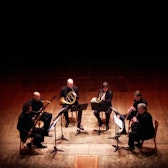
The instruments used in this recording are replicas of those known to Johann Christian Bach, including five-key boxwood clarinets, five or six-key maple bassoons, and valve-less 'natural' horns.
Composer's Artistic Vision
Johann Christian Bach was a major proponent of the 'galant' style, which moved away from his father's contrapuntal restrictions and foreshadowed the Classical idiom of Haydn, Mozart, and Beethoven.
You might also enjoy...
Mozart: Marches: K. 335, NO. 1 & 2; Serenade K. 320; Divertimento K. 251
Bach: Sinfonias Wq. 182 & 183
Carl Philipp Emanuel Bach: Vier Orchester-Sinfonien
Mozart: Haffner Serenade
Mozart: Divertimento in B K.287 "Zweite Lodronische Nachtmusik"
Mozart: Serenades & Divertimenti, Vol. 2
Mozart: Serenade No. 9 / 2 Marches, K335
Mozart: Symphony No. 41, K. 551 "Jupiter" & Divertimento, K. 136
Mozart: Serenade K. 204 & Divertimento K. 247
MOZART, W.A.: Eine kleine Nachtmusik / Salzburg Symphonies Nos. 1 and 2 / Serenata Notturna (Camerata Salzburg, Vegh)