Bach: Sonate a cembalo obligato e traversiere solo
8/24/2018, 14 Tracks, 58:31
Featuring
Laura Pontecorvo
Rinaldo Alessandrini
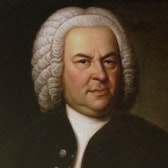
Johann Sebastian Bach
Did you know?
1/7
Composer Biography
In 1736, Johann Sebastian Bach was granted the title of Royal-Polish and Electoral-Saxon Court Composer, which gave him greater autonomy from his employers at the church of Saint Thomas.
Interpretation
The performers on this album chose to reconstruct the incomplete first movement of Sonata BWV 1032, using a version made by Rinaldo Alessandrini, one of the performers.
Historical Context
The transverse flute gained prominence in Dresden, the first German court to consider it a virtuoso instrument, influencing Bach's increased composition for it from the late 1720s.
Instruments
The recording uses a copy of a 'Buffardin Le Fils' transverse flute, an instrument with unique timbre and articulation characteristics, discovered on eBay in 2015.
Compositional Technique
The Sonata BWV 1032 is incomplete, with its first movement stopping at measure 62, likely due to the lower part of the manuscript page being cut off by Bach himself.
Composition History
The year 1736 was also when Bach wrote his only two autograph sonatas for transverse flute and obbligato harpsichord: BWV 1030 in B minor and BWV 1032 in A major.
Compositional Technique
Bach's compositional method often involved elaborating on pre-existing material, challenging the modern idea of a single, definitive original version.
You might also enjoy...
Telemann: Virtuoso
J.S. Bach: Trio Sonatas, BWV 525-530
Vivaldi / Valentine / Sarri: Flute Concertos
Mancini: Xii Solos Vol. 1 [recorder Sonatas], for a Flute with a Thorough Bass for the Harpsicord (London: J. Barrett & W. Smith)