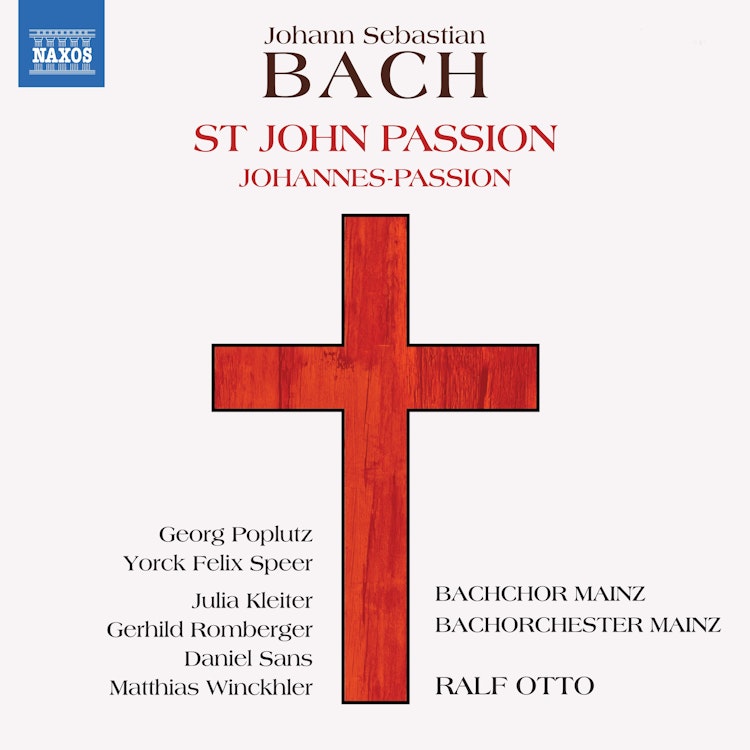
The funding for annual 'oratorical Passions' in Leipzig, which enabled Bach's St. John Passion, came from the last will and testament of jeweller's widow Maria Rosina Koppy in 1722.
Compositional Technique
The St. John Passion features exclusively recitativo secco for its recitatives, emphasizing the dominance of the Gospel narrative.
Composer's Artistic Vision
Bach continuously revised the St. John Passion throughout his life, creating four (possibly five) versions, suggesting he held its compositional value in high esteem and sought to optimize its musical quality.
Composition History
Bach's St. John Passion was the very first composition for what was to become an annual tradition of Passion performances for Good Friday vespers in Leipzig.
Interpretation
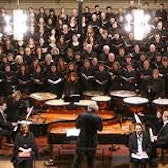
The Bachorchester Mainz specializes in historical performance practice using original instruments for Renaissance, Baroque, and Classical works, but also performs Romantic and contemporary music on modern instruments.
Recording & Production
This recording of the St. John Passion was produced in the Christuskirche in Mainz, a church consecrated in 1903 with excellent acoustics, which has been home to the Bach Choir Mainz and Bach Orchestra Mainz for over 60 years.
Compositional Technique
Bach's St. John Passion integrates texts from Baroque poets like Barthold Hinrich Brockes, Christian Heinrich Postel, and Christian Weise, in addition to the Gospel text, due to a lack of an overall poetic concept.
You might also enjoy...
Bach, J.S.: St. Matthew Passion (Highlights)
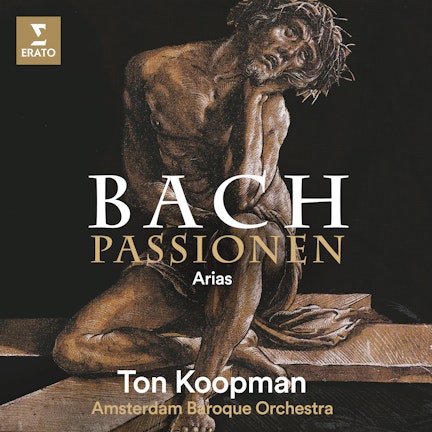
Bach: Passionen - Arias
Passio: Music for Holy Week & Easter, Vol. 2
Bach, J.S.: St. Matthew Passion (Highlights) / St. John Passion (Highlights)
J.S. Bach: Johannes-Passion, BWV 245
Bach: St John Passion
Bach, J.S.: St. John Passion, BWV 245
Bach: Matthäus-Passion (Highlights)
Bach: Sacred Arias
Quintessence J.S. Bach, Matthäus Passion, Johannes Passion