The final Contrapunctus 14, an incomplete triple fugue, may have been intended as a quadruple fugue and was left unfinished due to Bach's health problems and deteriorating eyesight.
Composer's Artistic Vision
Bach did not specify the instrumentation for The Art of Fugue, allowing for boundless imagination in its performance.
Compositional Technique
The Art of Fugue is built from a single simple theme, yet achieves remarkable complexity and beauty through counterpoint.
Composition History
The Art of Fugue was likely composed primarily between 1745-1746, following other major contrapuntal keyboard works like the Goldberg Variations.
Composition History
For many years, Bach's The Art of Fugue was believed to be his final work, an idea now widely refuted.
Compositional Technique
The fugues in The Art of Fugue progress in complexity, including simple fugues, double fugues with two subjects, triple fugues with three subjects, and mirror fugues where the music is strictly inverted.
Compositional Technique
Bach intended The Art of Fugue for a keyboard instrument, and the notation on four staves was a common practice for keyboard works to make the polyphony more legible.
You might also enjoy...
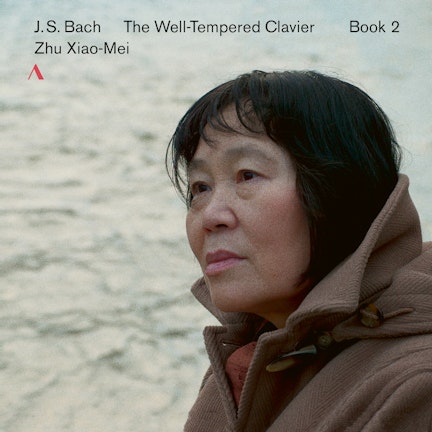
J.S. Bach: The Well-Tempered Clavier Book II
Bach: The Well-Tempered Clavier, Book 1 - A Composer's Approach
Bach: The Well-tempered Clavier I - Selection
Bach: The Well-Tempered Clavier, Book I, Preludes & Fugues Nos. 1-8, BWV 846-853 - Gould Remastered
J.S. Bach: The Well-Tempered Clavier, Book 1, BWV 846-869
Bach: The Well-Tempered Clavier, Book II, Preludes & Fugues Nos. 9-16, BWV 878-885 - Gould Remastered
J.S. Bach: The Well-Tempered Clavier, Book 2, BWV 870-893
Bach: The Art of Fugue
J.S. Bach: The Well-Tempered Clavier, Book 2, BWV 870-893