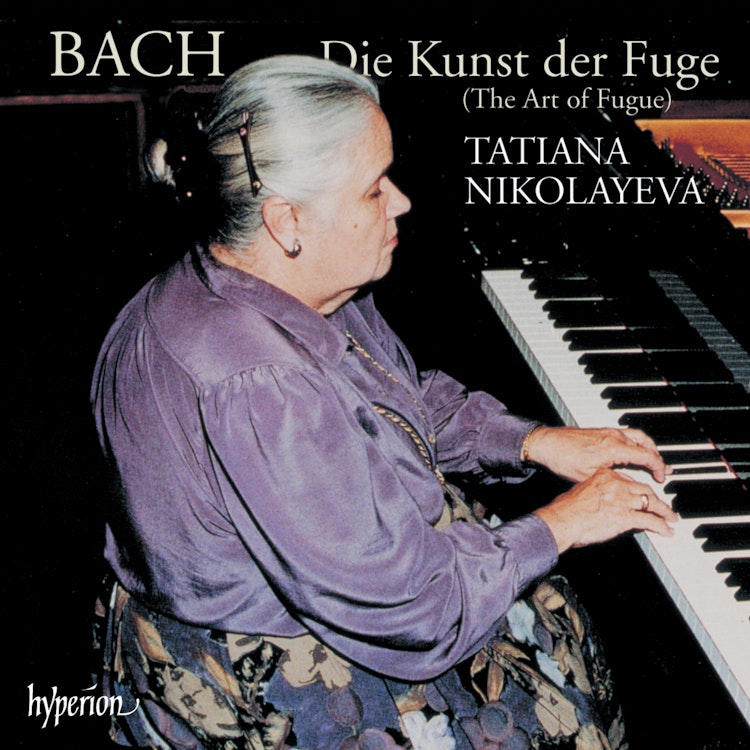
Bach: The Art of Fugue (Die Kunst der Fuge), BWV 1080
10/27/2023, 26 Tracks, 2:02:08
Featuring
Tatiana Nikolayeva
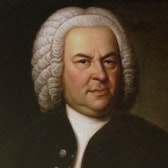
Johann Sebastian Bach
Did you know?
1/7
Notable Performances
The 20th-century revival of 'The Art of Fugue' began with a painstaking unraveling by young Swiss student Wolfgang Graeser, whose version was first heard in 1927 in Leipzig.
Critical Reception
For much of its history, 'The Art of Fugue' suffered undeserved neglect and obscurity, with only thirty copies sold by 1756.
Composer Biography
In his final years, Bach, then Cantor at St. Thomas's, Leipzig, became increasingly preoccupied with contrapuntal music, completing works like the 'Goldberg Variations' and 'Musical Offering'.
Compositional Technique
In the final triple fugue of 'The Art of Fugue', Bach included the letters of his own name (B-A-C-H) as a musical motif, setting his personal seal on the work.
Composer's Artistic Vision
While creating 'The Art of Fugue', Bach's primary aim was to exhibit the comprehensive possibilities of a single, simple musical 'subject' through various types of fugal and canonic writing.
Compositional Technique
Bach's 'The Art of Fugue' is considered a monumental intellectual tour de force that summarizes the entire known potential of counterpoint.
Composition History
In 1747, during a visit to Potsdam, Bach was challenged by Frederick the Great to improvise a six-part ricercare, which led to the creation of his 'Musical Offering'.
You might also enjoy...
J.S. Bach: The Well-Tempered Clavier, Book II BWV 870-893
Bach, JS : Well-Tempered Clavier Book 2
J.S. Bach: The Art of Fugue, BWV 1080, Vol. 2
J.S. Bach: Das Wohltemperierte Klavier, Book 2, Bww 870 - 893
J.S. Bach: The Well-Tempered Clavier Book I
Bach: The Well-Tempered Clavier, Book I: BWV 846-869
J.S. Bach: The Well-Tempered Clavier, Book 2, BWV 870-893
Bach, JS: Das wohltemperierte Klavier, Teil II, BWV 870 - 893
Morning Piano - JS Bach: Prelude and Fugue No. 2 BWV 847
Frescobaldi Complete Keyboard Works, 1 - Il Primo Libro delle Fantasie a quattro