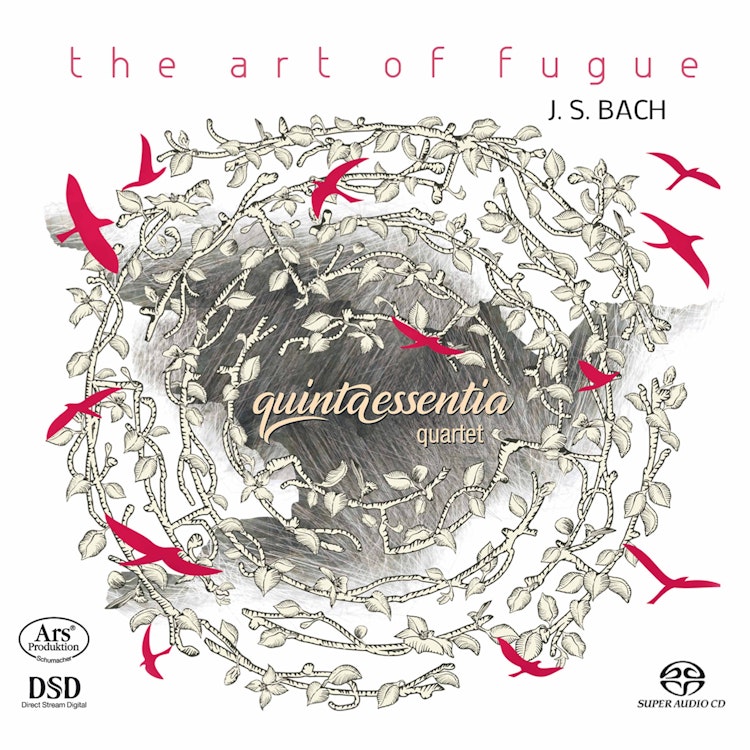
The performers on this album used two sources for their recording: Bach's own manuscript (1742-46) and the first edition of 1751, prepared by his son Carl Philipp Emanuel Bach.
Composition History
Bach's manuscript of 'The Art of Fugue', written in four voices near the end of his life, lacks any indication of instrumentation.
Composition History
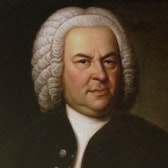
Bach musically signed 'The Art of Fugue' in its final subject with his initials B-A-C-H, using the notes Bb-A-C-B natural.
Compositional Technique
Johann Sebastian Bach's 'The Art of Fugue' elevates the fugue to its highest artistic level through his creative and economical treatment of themes.
Instruments
The performers chose historic instruments for this recording to achieve a greater variety in sonority, rich in contrasts, using a larger number of instruments.
Instruments
A great bass recorder, crucial for this recording, had to be specially made by Japanese luthier Hiroyuki Takeyama, as no historic original of this instrument is known to exist.
Composer's Artistic Vision
For the performers on this album, the recorder's simplicity lies in its capacity to glimpse reality without distortion, a process that is laborious and inventive.
You might also enjoy...
Il cembalo intorno a Gesualdo: Paola Erdas
Musica warmiensis, Vol. 1
Dresden
Trombett- und musikalischer Taffeldienst
Campana: Arie a una, due e tre voci
Heinrich Albert's Pumpkin Hut
Josquin Desprez: Septiesme livre de chansons
Chamber Music (Baroque) - Vivaldi, A. / Tartini, G. / Sammartini, G. (Fire Beneath My Fingers)
Vitali: Sonatas, Op. 11 for Violin and Basso Continuo
Quantz: Trio Sonatas
Mimesis - Transcriptions of Bach works
Rodio, Mayone, De Macque: Di voci affettuose, Ricercari napoletani