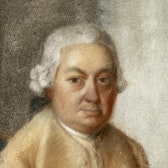
Carl Philipp Emanuel Bach, the composer, left university in 1738 and declined an offer to travel abroad to accept a call from the Crown Prince (later King Friedrich II of Prussia) in Ruppin.
Performer Biography
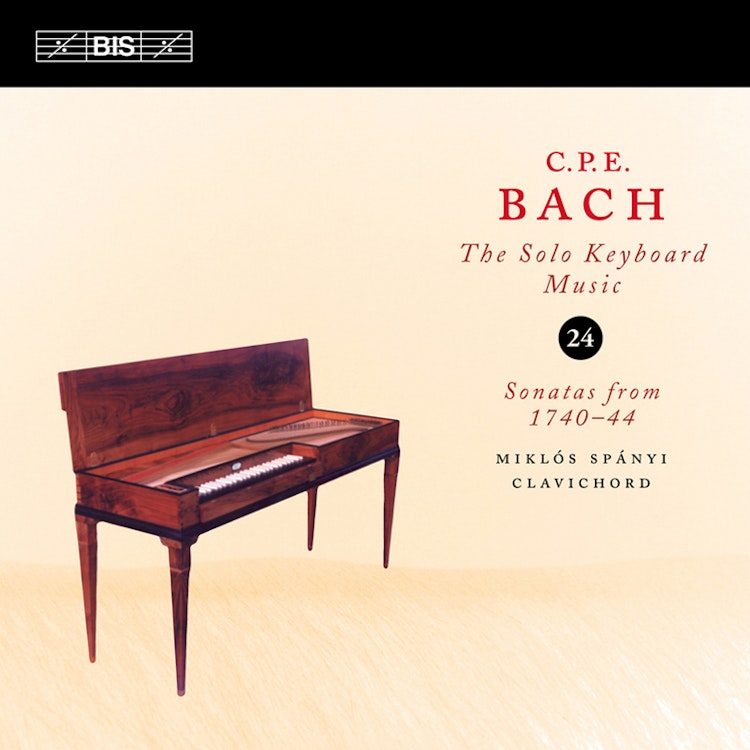
Miklós Spányi, the performer, has won first prizes at international harpsichord competitions in Nantes (1984) and Paris (1987) and has focused his research and performance on Carl Philipp Emanuel Bach's works.
Composer's Artistic Vision
Carl Philipp Emanuel Bach frequently revised his keyboard works throughout his life, aiming to update or improve them, a process he called 'renewal' (Erneuerung).
Interpretation
Performer Miklós Spányi incorporates Carl Philipp Emanuel Bach's own 'afterthoughts' into the repeats of Sonata Wq 62/3, rather than improvising his own variations.
Composition History
The years 1743-44 were highly significant for Carl Philipp Emanuel Bach's compositional development, marked by numerous new keyboard concertos and sonatas, as well as extensive revisions of earlier works.
Compositional Technique
The Sonata in B minor, Wq 65/13, composed while Bach was at a spa, is notably more substantial and experimental than his Berlin works, featuring syncopated hemiola and operatic orchestral-like passages.
Instruments
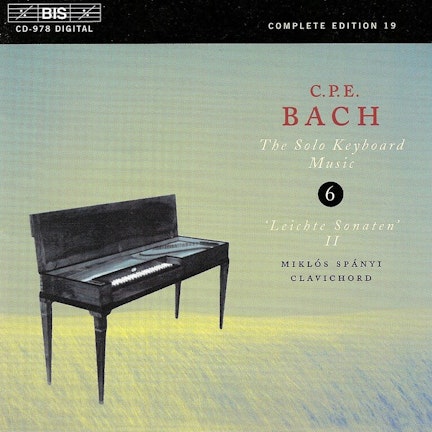
The clavichord used for this recording was custom-built in 2010 by Joris Potvlieghe, based on large 18th-century Saxonian models, to achieve a massive and colorful sound.
You might also enjoy...
Bach: Keyboard Music, Vol. 5
Bach, J.C.: Keyboard Sonatas, Op. 5
Bach: Keyboard Music, Vol. 4
J.S. Bach: French Suite No. 2 in C Minor, BWV 813: III. Sarabande