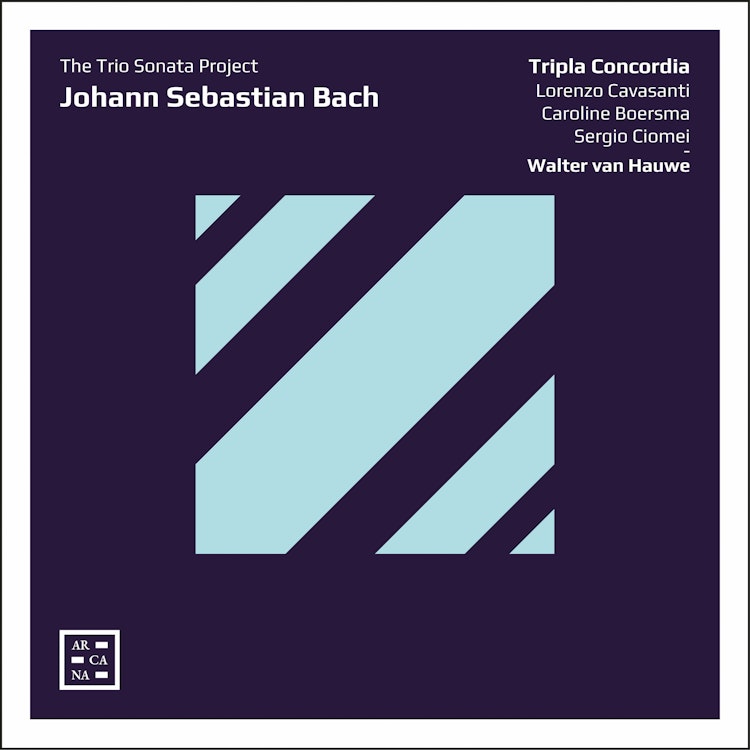
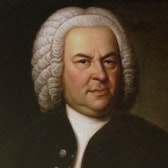
Johann Sebastian Bach, a composer featured on this album, frequently transcribed his own older works and those of other composers, always remaining true to the original's basic idea and 'message'.
Interpretation
The performers, Tripla Concordia, adapted Bach's compositions for recorders and continuo, making changes like octave transpositions and tempo adjustments due to the instrument's dynamic limitations, while prioritizing structural clarity.
Recording & Production
This recording is dedicated to the memory of Frans Brüggen, a mentor and colleague whose profound influence and constant friendship were highly valued by Tripla Concordia and Walter van Hauwe.
Historical Context
In the Baroque period, composers commonly reused their own or others' works, viewing it as a sign of respect rather than an infringement of creative ownership.
Instruments
The recorder and organ share a similar sound production technique, as air flow is cut by a 'labium' to make the instrument pipe vibrate, making them 'first cousins'.
Composition History
Musicologist Alberto Basso suggests that Bach's Sonata BWV 1027, often considered a viola da gamba piece, was originally a trio sonata for two flutes and continuo, later transcribed for gamba.
Composer Biography
Bach was deeply impressed by the famous lutenist Sylvius Leopold Weiss around 1720, an encounter that likely led to Bach's cycle of lute works.
You might also enjoy...
Albinoni: Concerti con Oboe
Chamber Music (Baroque) - Falconieri, A. / Merula, T. / Cabanilles, J. / Storace, B. / Castello, D. / Marais, M. (Folias Festivals)
Marcello, A.: Oboe Concerto in D Minor / Telemann, G.P.: Oboe Concerto in F Minor / Handel, G.F.: Oboe Concerto No. 3
Cypriot Vespers
Dal Barba: Requiem and Other Sacred Music
Bodinus, S.: Trio Sonatas Nos. 1-6 From Musikalischen Divertissements, Part Iv
Mudge, R.: 6 Concertos A 7 (Capriccio Baroque Orchestra)