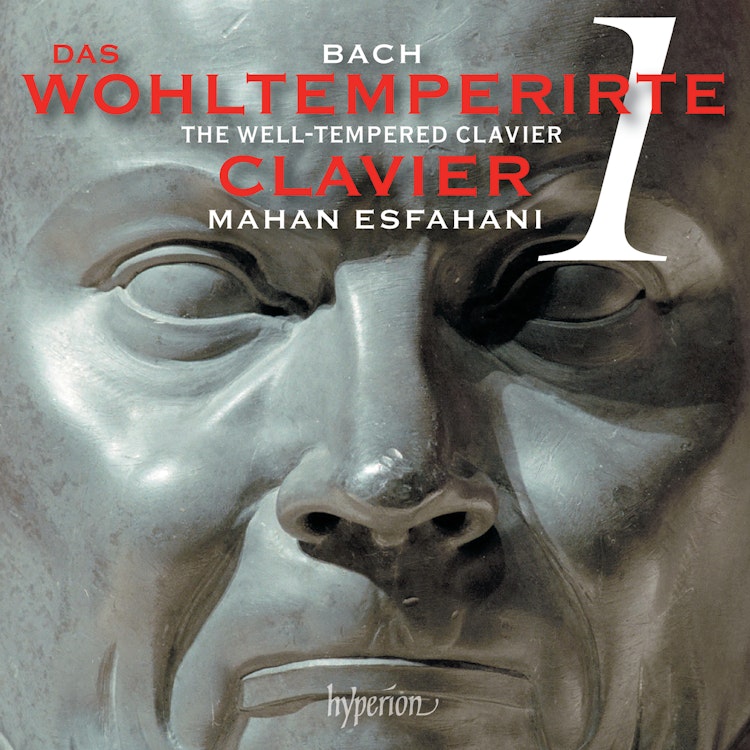
J. S. Bach's preface to The Well-Tempered Clavier refers to "musical youth desirous of study," likely aimed at budding composers, reflecting the era's emphasis on unity in performance, improvisation, and composition.
Recording & Production
The recording uses an unequal temperament, with keys having fewer accidentals tuned with purer major thirds, and those with more accidentals having wider major thirds, to give each key a different color.
Interpretation
Mahan Esfahani, the harpsichordist, repeats the C major prelude after the B minor fugue, viewing the preludes in Book 1 as variations on the first.
Historical Context
The title of The Well-Tempered Clavier refers to an intelligent distribution of the scale across all twenty-four keys, not equal temperament, contrary to some assertions.
Instruments
The harpsichord used on this album is a German double, based on a 1710 instrument by Johann Heinrich Harrass, which may have belonged to J. S. Bach and been given to his son Wilhelm Friedemann Bach.
Performer Biography
Mahan Esfahani, the harpsichordist, was the first and only harpsichordist to be a BBC New Generation Artist (2008-2010) and a Borletti-Buitoni prize winner (2009).
Compositional Technique
J. S. Bach's The Well-Tempered Clavier is didactic, featuring movements in every major and minor key of the chromatic scale and polyphonic writing.
You might also enjoy...
Bach, J.S.: Well-Tempered Clavier (The), Book 1, Bwv 846-869
J.S. Bach: The Well-Tempered Clavier, Book 2
Bach, J.S.: Inventions and Sinfonias, Bwv 772-801
BACH - Kunst der Fuge - The Art of the Fuge - L' Art de la Fuge
J.S. Bach: The Well-Tempered Clavier, Book 2
Bach, JS: Das Wohltemperierte Klavier
J.S. Bach: Musikalisches Opfer, BWV 1079: Ricercar a 3