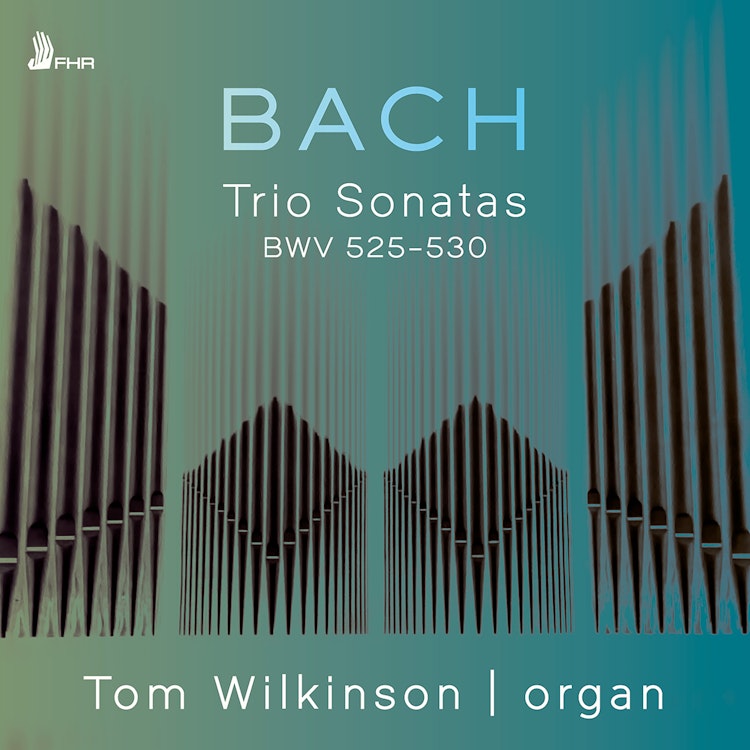
The earliest surviving manuscript of these sonatas, P 271, is an autograph by J.S. Bach, while another, P 272, is in the hands of his son Wilhelm Friedemann Bach and second wife Anna Magdalena Bach.
Performer Biography
Tom Wilkinson, the organist on this recording, is the University Organist and Associate Lecturer at the University of St Andrews, Scotland.
Interpretation
The performer, Tom Wilkinson, aimed for an 'instrumental' effect in this recording, reflecting Bach's interest in instrumental ensemble performance, possibly influenced by his directorship of the Leipzig Collegium Musicum.
Composition History
Bach's first biographer, Johann Nikolaus Forkel, stated that Bach composed these sonatas for his eldest son, Wilhelm Friedemann Bach, to develop his organ technique.
Compositional Technique
Bach's six Trio Sonatas for Organ are unusual because each hand and the feet play an independent contrapuntal line, making them 'ensemble music for one player'.
Recording & Production
This recording was made on the Jürgen Ahrend organ, built in 1977-1978, located in the Reid Concert Hall at the University of Edinburgh.
Composer's Artistic Vision
Bach's contemporaries would have found it daring to transplant the secular trio sonata genre onto the organ, which was primarily a liturgical instrument.
You might also enjoy...
Corrette : Noël 1788 (Messes pour le temps de Noël - Nouveau Livre de Noëls)
J.S. Bach: Organ Works, Vol. 6
Galuppi: Organ Sonatas
Sacred Arias
The American Bandmasters Association Commemorative Recording Series: John R. Bourgeois
Boyce: Symphonies Nos. 1-8 - L. Mozart: Toy Symphony
Walton, Rutter, Lane, Curtis: Classical Winds, Vol. 1, featuring concert band arrangements by Paul Noble
Bach: The Trio Sonatas
Organ Recital: Hanns, Ander-Donath - BACH, J.S. / BOHM, G. / MICHEELSEN, H.F. / REGER, M. (1944)